
Restaurant Review: Kaiseki Mizuki, The Ritz-Carlton Kyoto
Introduction
Entering the Ritz-Carlton, Kyoto is akin to stepping into a contemporary fortress of calm that honors the city’s aristocratic past. Mizuki, located on the hotel’s B1 floor, is a subterranean sanctuary designed around a dramatic four-story waterfall and a meticulously manicured rock garden. The first impression is one of hushed reverence; the restaurant is divided into four sections—Kaiseki, Sushi, Tempura, and Teppanyaki—each operating with the precision of a fine-tuned orchestra. It also houses one of the most elegant staircases in the world, and you’ll know when you get there.
Mizuki is uniquely structured into four specialized culinary sections: Kaiseki, Sushi, Tempura, and Teppan. Each section is helmed by a dedicated chef whose creativity expresses an artistic Japanese world. For those seeking the definitive Kyoto experience, the Kaiseki dining room remains the most intimate, focusing on authentic multi-course meals that reflect the precise aesthetic sense of Japan through museum-quality tableware and artisanal presentation.
The restaurant maintains its status as one of Kyoto’s premier dining destinations for those inspired to live a little. While the Tempura section famously holds a Michelin star, the Kaiseki experience at Mizuki is no less prestigious in its execution. The service is "next level" even by Japanese standards; it is a place where your needs are anticipated with a quiet, refined sincerity that makes every guest feel like part of an imperial performance.
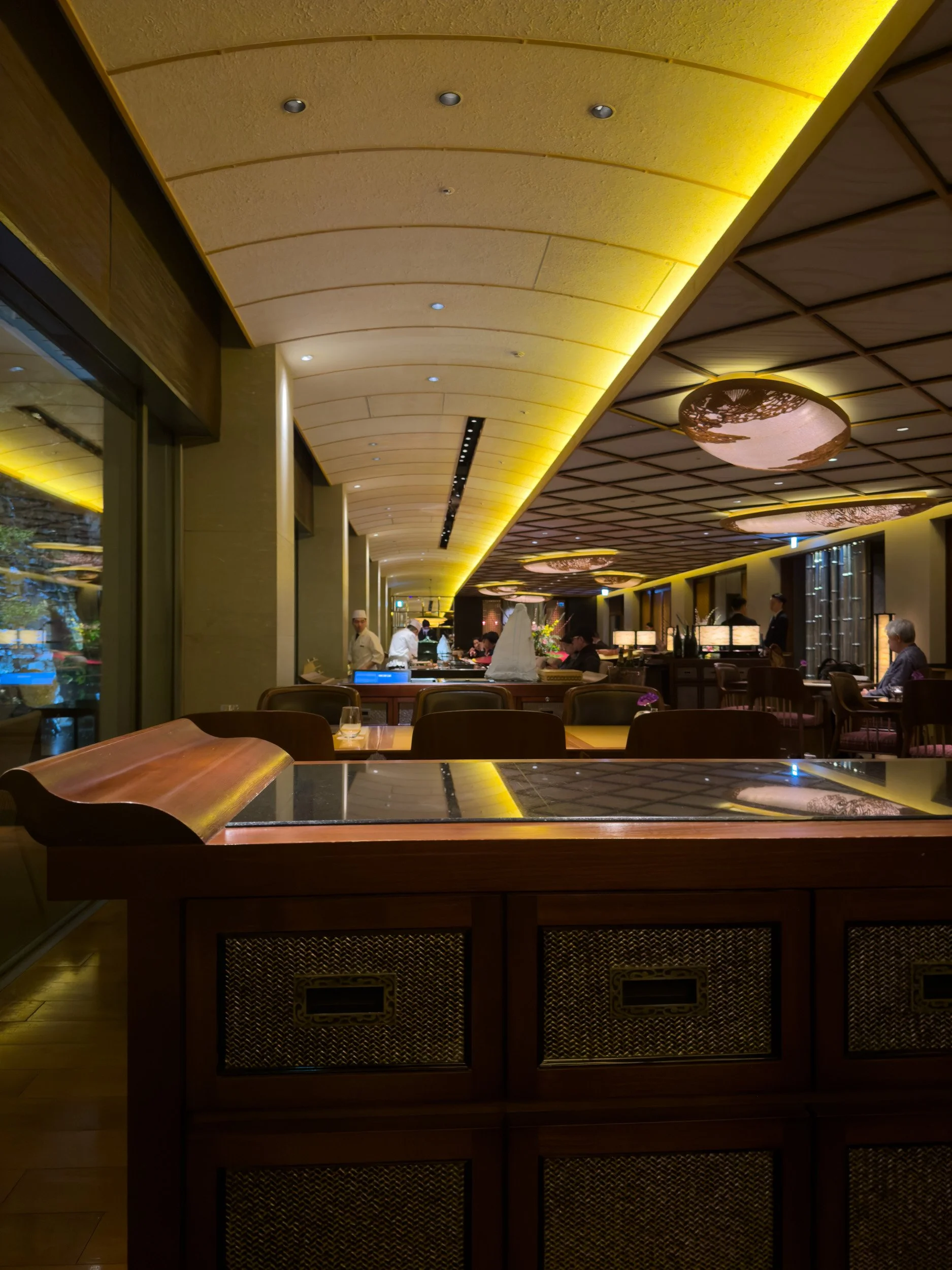
Atmosphere | Classic Luxury Vibes
The atmosphere at Mizuki is one of "calculated serenity". The interior design emphasizes magnificent Japanese craftsmanship, from latticed bamboo walls to lacquer-painted furniture that feels modern yet deeply rooted in the Meiji era. The most dramatic feature remains the glass wall overlooking the water feature; it creates the sensation of dining inside the Kamo River itself, especially as the sunset casts silver light over the nearby Higashiyama mountains.
Unlike more casual dining spots, the seating at Mizuki is designed to prioritize the guest's view of both the plate and the garden. The use of contemporary art on the table—plates designed by emerging artists—complements the minimalist, Zen-inspired décor. It is a space where conversation feels naturally lowered, allowing the "musical" sequence of the meal to take center stage.
The property’s grounds are so well-integrated that the transition from the hotel’s public spaces to the restaurant feels entirely seamless. The scent of incense and the sound of water follow you from the lobby into the dining room, creating a cohesive sensory bubble. It is an environment that demands you slow down, leave your phone face-down, and engage with the craftsmanship of the space.
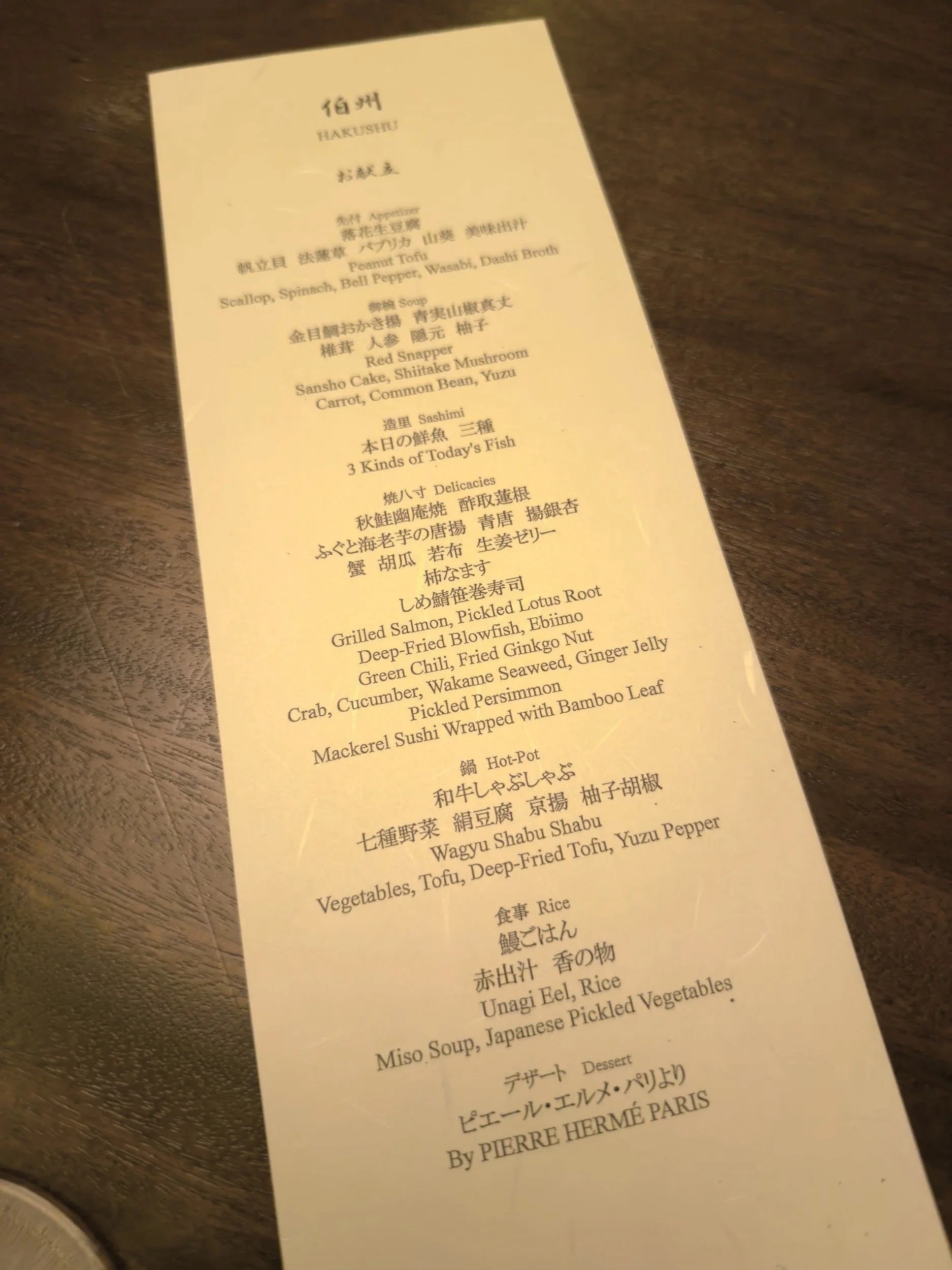
The Menu | Hakushu
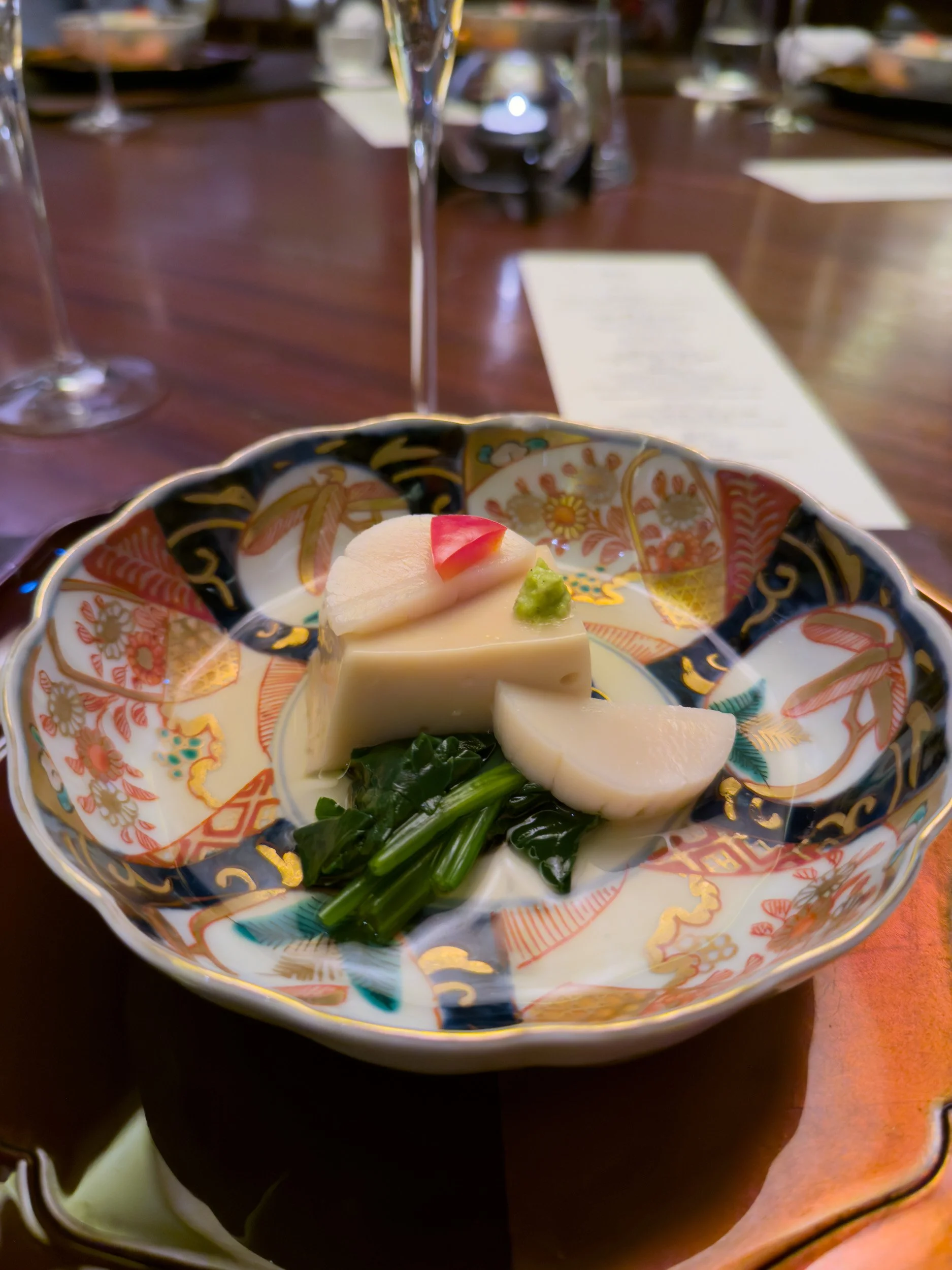
We started off with our Japanese food journey with the appetizer.
The Appetizer (Sakizuke) is a study in texture, featuring Peanut Tofu served with Scallop, Spinach, and Bell Pepper. The addition of Wasabi and Dashi Broth provides a sharp, savory contrast to the creamy, nutty density of the tofu. It is a delicate opening designed to awaken the palate with a balance of earth and sea.
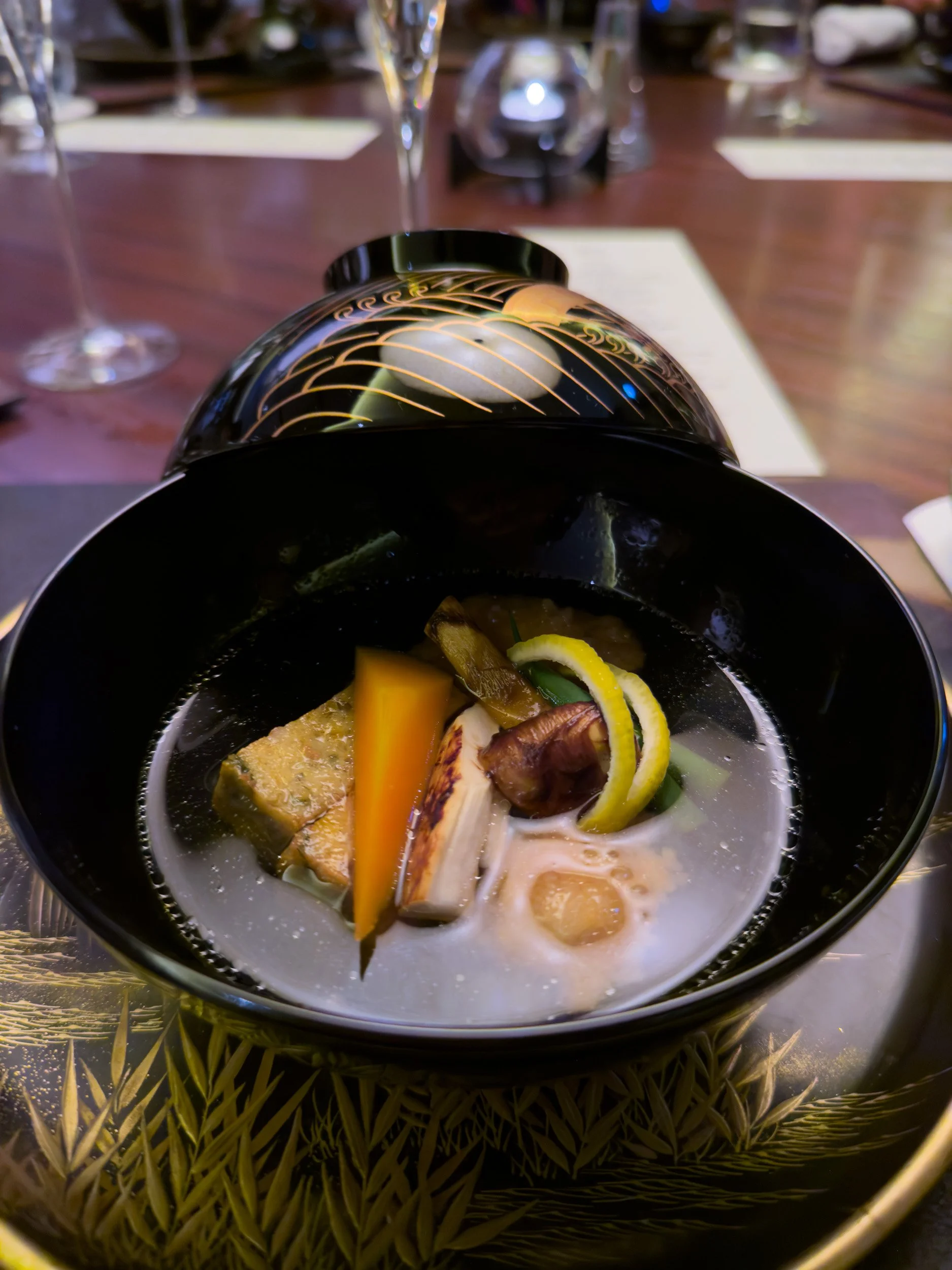
Next, the Soup (Owan) course transitions into higher complexity with Red Snapper accompanied by a unique Sansho Cake. The broth is layered with Shiitake Mushroom, Carrot, and Common Bean, all brightened by the citrusy aromatic of Yuzu. The snapper is typically steamed to a point of translucent perfection, allowing the numbing brightness of the sansho to shine through.
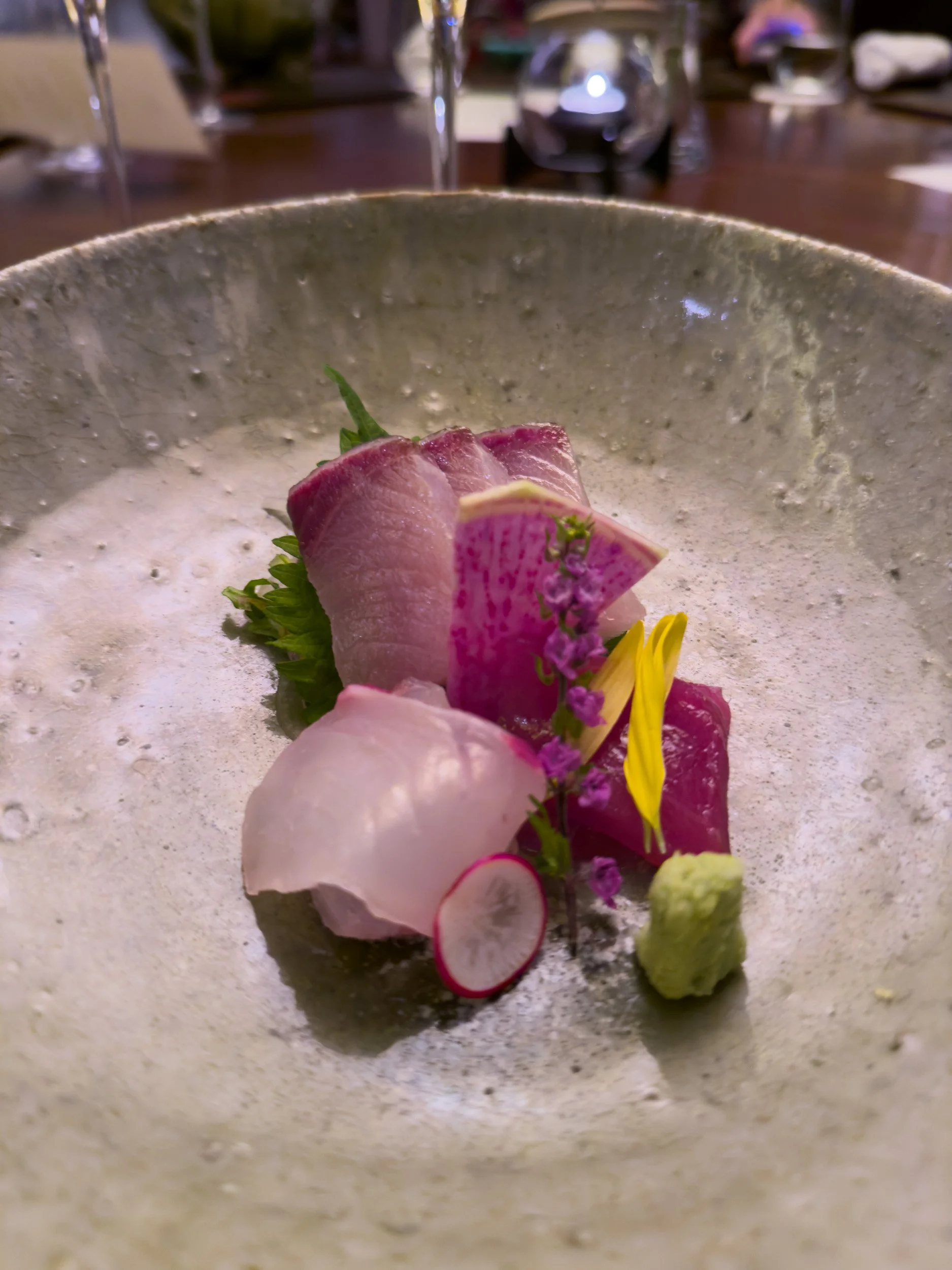
A few moments later, the Sashimi (Tsukuri) is presented as 3 Kinds of Today’s Fish, sourced from the finest local markets. At Mizuki, the presentation of the raw fish is often considered an artistic peak, with garnishes that mimic natural floral forms according to the micro-season. The quality is impeccable, with each slice reflecting the chef’s surgical precision and a deep respect for the ingredient's integrity.
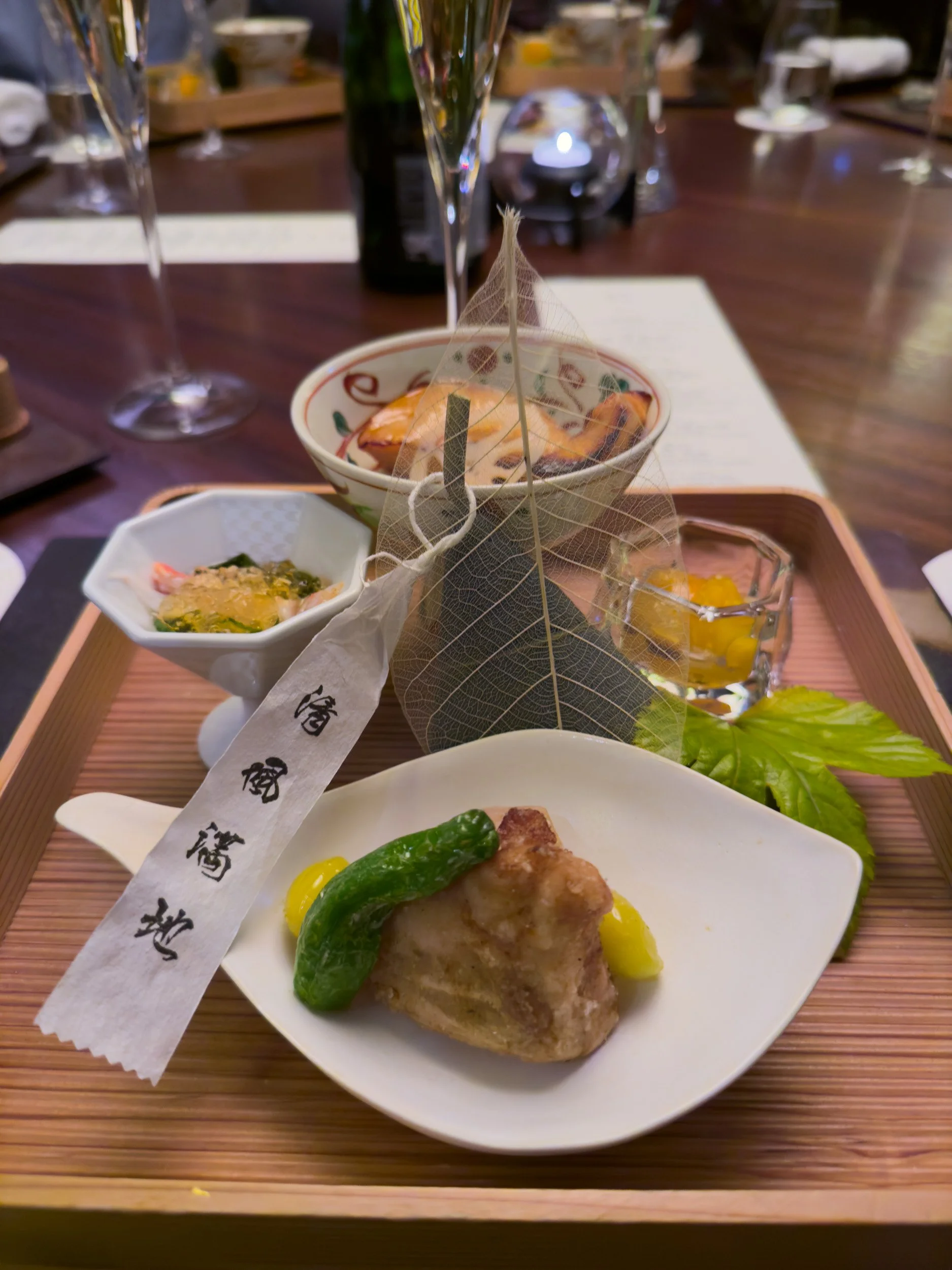
Along the way, we were given the heavyweights of the courses - the Delicacies (Yakihassun) course is the theatrical heart of the Hakushu menu, featuring an intricate mosaic of small bites: Grilled Salmon, Pickled Lotus Root, Deep-Fried Blowfish (Fugu), and Fried Ginkgo Nut. This is followed by a vibrant mix of Green Chili, Crab, Cucumber, and Wakame Seaweed suspended in a Ginger Jelly, alongside Pickled Persimmon and a traditional Mackerel Sushi Wrapped with Bamboo Leaf. It is a whirlwind of techniques—grilled, fried, and pickled—all arriving as a miniature landscape on a single plate.
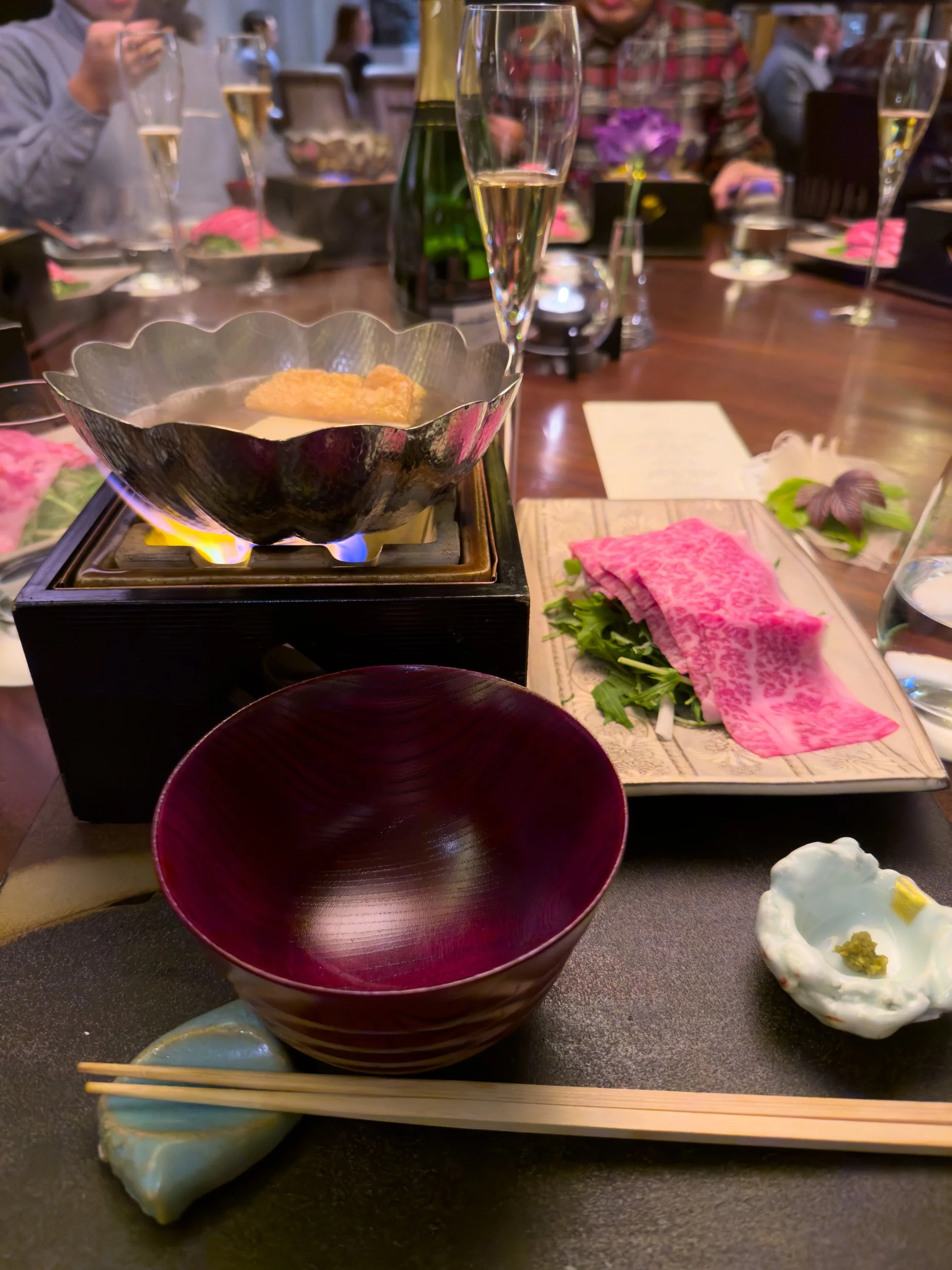
Additionally, the Hot-Pot (Nabe) introduces the luxury of Wagyu Shabu Shabu, featuring highly marbled beef swirled in a dashi broth. Accompanied by Vegetables, Tofu, and Deep-Fried Tofu, the dish is elevated by a side of Yuzu Pepper (Yuzukosho), which cuts through the richness of the fat. The wagyu is so thinly sliced that it literally melts, a theatrical interlude that adds a rich, comforting weight to the evening.
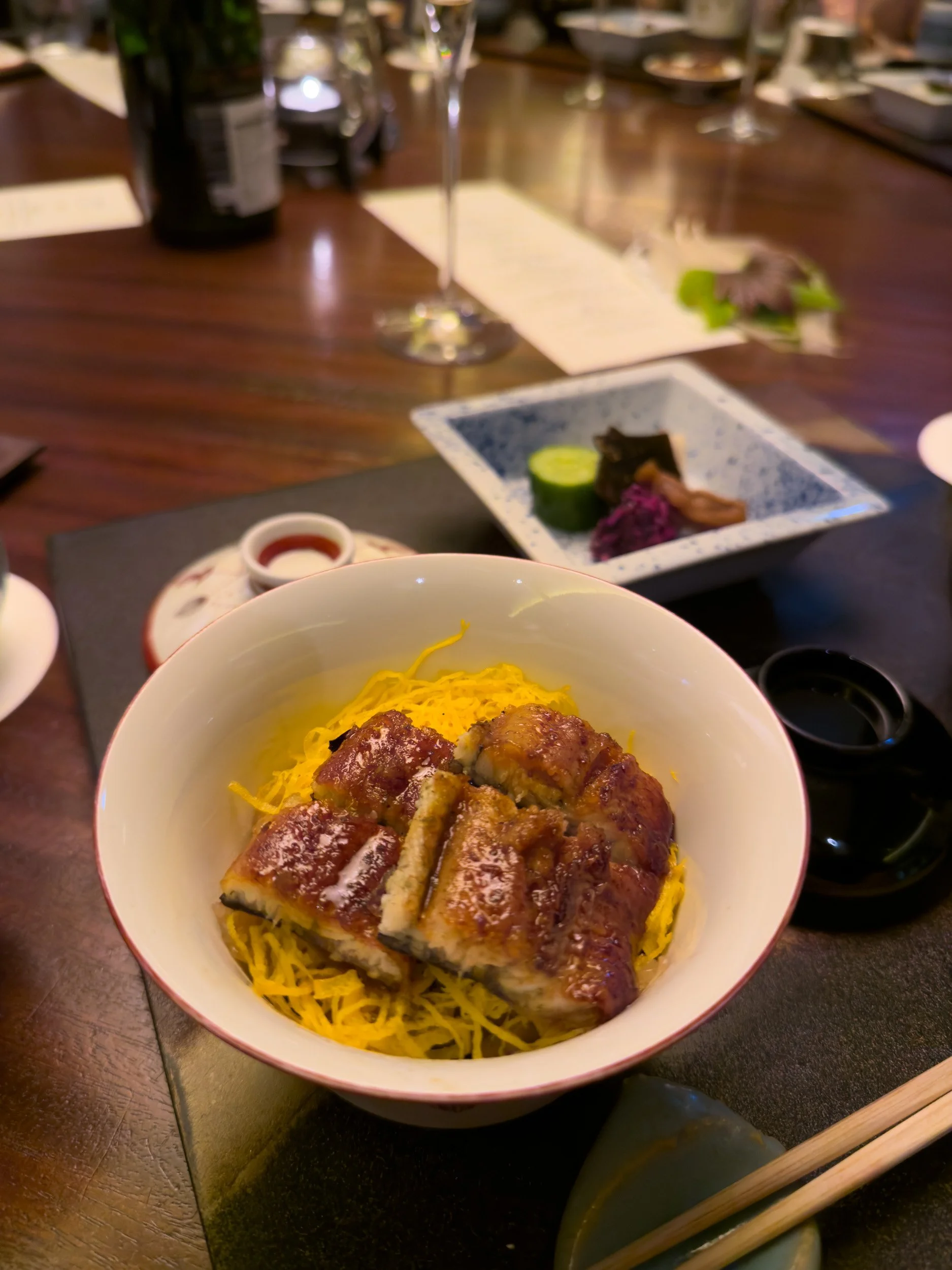
The meal concludes with the Rice (Shokuji) course, featuring Unagi (Eel) and Rice. This is served alongside a deep, warming Miso Soup and a selection of Japanese Pickled Vegetables. The unagi provides a smoky, sweet finish that grounds the meal, while the pickles offer the necessary acidity to close the savory arc of the journey.
Pricing | You Get What You Paid For.
Kaiseki Mizuki is definitely not cheap.
A classic dinner course typically ranges from ¥20,000 to ¥30,000+, positioning it competitively alongside other five-star Kyoto hotel restaurants like those at the Park Hyatt Kyoto or the Aman Kyoto. For those looking to maximize value, the lunch-only menus (such as the Shisen or Hagoromo) offer a slightly more accessible entry point into Mizuki's world. However, the full dinner Kaiseki remains the definitive choice for those that want to full experience. Compared to independent high-end ryotei in Gion, Mizuki offers the benefit of easier English-language booking and the world-renowned Ritz-Carlton service standard.
The "Premium" or "Tasting" sets often lean toward the upper end of that scale when they include high-cost seasonal delicacies like the Deep-Fried Blowfish (Fugu) and Wagyu Shabu Shabu found in our menu. When you factor in a 15% service charge and the 10% consumption tax—standard for luxury properties in Japan—the final bill for two diners, including modest sake pairings or Pierre Hermé tea service, will comfortably settle between ¥70,000 and ¥90,000 ($460–$600 USD).
Market Comparison: The 5-Star Hotel Rivals
To truly understand Mizuki’s value, we can compare it to three of Kyoto’s most luxurious hotel dining scene:
Kyoyamato at Park Hyatt Kyoto: This is Mizuki’s most direct and formidable competitor. Kyoyamato is a legendary, family-run ryotei that partners with the Park Hyatt. Dinner here starts significantly higher, often beginning at ¥38,500 and scaling up to ¥66,000 for their premium seasonal courses. While the history and the views from the Kodai-ji hillside are peerless, the entry price is roughly 30–50% higher than Mizuki's.
Taka-an at Aman Kyoto: Located in a secluded forest glade, Taka-an offers a "Ten" Kaiseki dinner that typically starts at ¥40,000. During specialty seasons, such as the winter Snow Crab (Zuwaigani) course, the price can skyrocket to ¥98,000 per person. Compared to Taka-an, Mizuki feels like a more accessible "urban luxury" option, offering a similarly refined aesthetic at a more palatable price point for a standard evening.
Sushi Wakon at Four Seasons Kyoto: While focused on sushi rather than a full Kaiseki progression, Wakon’s dinner omakase is priced in the ¥32,000+ range. This reinforces Mizuki’s position as the "sweet spot" in the market; it provides the full variety of a multi-course Kaiseki (soup, sashimi, grilled items, and hot pot) for roughly the same price as a high-end sushi-only meal elsewhere.
Restaurant Service | Immaculate and Professional
The service at Kaiseki Mizuki transcends standard fine dining, entering the realm of psychological anticipation through a masterclass in the Ritz-Carlton’s legendary omotenashi.
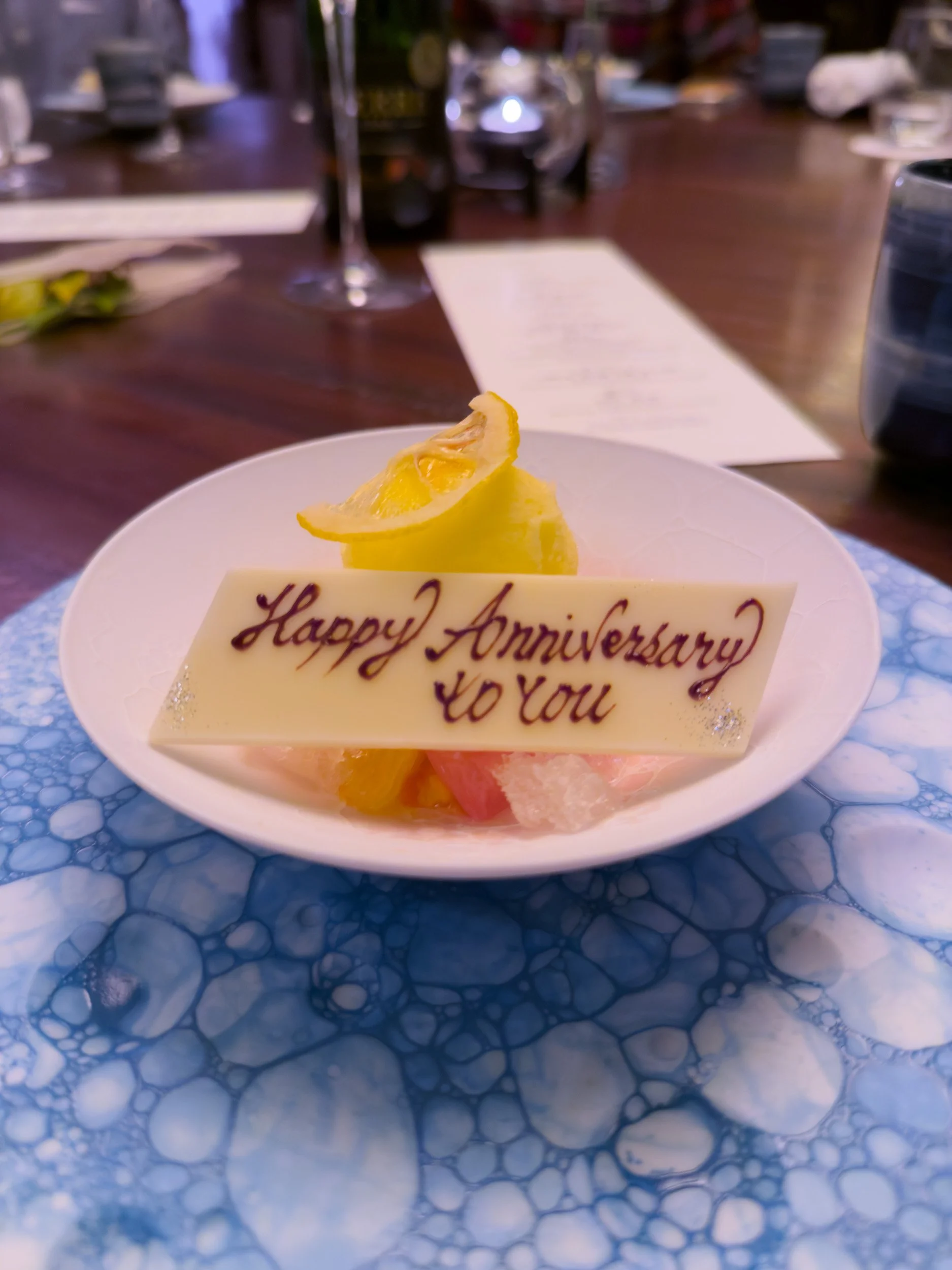
One of the most striking "one of a kind" aspects of the experience is how the staff handles celebratory nuances without being prompted. For instance, when a toast is in order, the team meticulously adjusts celebratory drinks to accommodate both alcoholic and non-alcoholic drinkers simultaneously. If a guest prefers to abstain, they are not merely offered a generic soda, but rather a complex, house-infused botanical mocktail that matches the aesthetic and weight of the alcoholic pairing, ensuring every guest feels fully included in the ritual. Our relatives were super thrilled at that moment, and made for an even better night.
Proactive gestures at Mizuki often occur in the quiet, observant moments between courses. In a display of extreme detail, servers often note which hand a guest uses for their chopsticks and subtly reposition every subsequent dish and glass to align perfectly with that guest's natural reach. Beyond the ergonomics, the staff manages the physical environment with grace; if a guest mentions the winter chill, they may discretely offer a heated hand warmer or adjust the airflow before any discomfort truly sets in. Even the tableware becomes part of the service, as staff provide non-intrusive histories of the local kilns or artists behind the museum-quality plates, deepening the guest's connection to Kyoto's physical history.
After the final Pierre Hermé dessert, the staff often recalls small details from the conversation—perhaps a guest's interest in a local landmark or a preference for a specific tea—and provides a handwritten note or a small seasonal parting gift as a memento. By treating each guest's evening as a sacred trust and responding with such high levels of emotional intelligence, Mizuki cements its reputation as one of the most distinguished and thoughtful dining rooms in Japan.
Curated for Class?
In the final estimation of Curated for Class, Kaiseki Mizuki remains the definitive standard for haute cuisine within the Kyoto hotel scene, successfully balancing the rigid discipline of tradition with the polished expectations of a global luxury brand. It is a rare establishment where the architectural drama of a subterranean waterfall is matched by the surgical precision of the kitchen, from the first bite of peanut tofu to the final, world-class Pierre Hermé macaron. For the traveler who demands a dining experience that is both a sensory performance and a masterclass in emotional intelligence, this is an essential pilgrimage.
While the financial commitment is substantial, the "Class" verdict is that the value delivered—through the rarity of ingredients like blowfish and the uncanny, proactive nature of the service—justifies the premium. Mizuki does not merely feed its guests; it anchors them in the seasonal soul of Kyoto, leaving a lingering sense of harmony that persists long after the last drop of dashi has been enjoyed. It is a resplendent jewel in The Ritz-Carlton's crown and arguably the most thoughtful Kaiseki journey one can undertake in the ancient capital.
Is it worth it? Resoundingly, yes. The combination of a Michelin-level kitchen and the Zen-like Ritz-Carlton architecture provides a dining environment that is nearly impossible to replicate. It is the perfect choice for a milestone celebration or a deep dive into the soul of Japanese hospitality. The only critique is the difficulty of securing a prime window seat without booking several weeks in advance. Additionally, while the Pierre Hermé desserts are world-class, some traditionalists might miss a more "Japanese-style" fruit or wagashi finish to the Kaiseki journey.
Curated for Class Final Score | 42.5/50
Kaiseki Mizuki distinguishes itself as a premier culinary destination by masterfully integrating the seasonal "Hakushu" journey with world-renowned Pierre Hermé desserts, all set within a stunning architectural space overlooking a subterranean waterfall. This expensive but luxurious experience is defined by its proactive, high-touch service, which intuitively adapts to guest preferences—such as tailoring celebratory toasts for non-drinkers—to create a truly personalized atmosphere of Japanese omotenashi.
Service: 9/10
Atmosphere: 8.5/10
Food Quality: 8.5/10
Mastery of Taste(s): 9/10
Value for Money: 7.5/10