
Restaurant Review: むろい, Muroi (Kyoto)
Introduction
You wouldn’t even know this place was Muroi.
Muroi むろい provides a narrative-driven dining experience that redefines the parameters of modern kaiseki. Led by Chef Shigeru Muroi—a veteran with a global resume that spans the kitchens of Nobu and the residences of international ambassadors—this one-star Michelin establishment operates with a rhythmic, grounded elegance. It remains a rare outpost where the high-stakes precision of fine dining is softened by a genuine, agrarian warmth.
The arrival at Muroi is a transition into a slower tempo of Japanese life. Housed in a renovated 140-year-old Meiji-era farmhouse, the restaurant acts as a living bridge between Kyoto’s storied past and its culinary future. The interior design avoids the clinical minimalism often found in modern high-end Japanese restaurants, opting instead for exposed timber beams, dim, atmospheric lighting, and a presence that feels deeply inherited rather than newly constructed. It is a space where the scent of simmering dashi and the sight of seasonal floral arrangements create an immediate sense of belonging.
What distinguishes this restaurant in the current Kyoto hierarchy is its absolute commitment to "place." Muroi does not just serve food; it serves the specific terroir of the Takagamine neighborhood. By centering the menu on the legendary vegetables of the Higuchi Nouen farm located directly across the street, Chef Muroi has created a self-contained ecosystem of luxury. It is a destination for the traveler who finds beauty in the fundamental—where a single, perfectly harvested turnip is treated with the same reverence as the finest Omi beef.
Muroi has become one of the most respected restaurant in Kyoto, that My Concierge Japan recently created a short film about this place!
Cost at Muroi
Dinner at Muroi is an investment in authenticity that typically ranges from ¥18,000 to ¥25,000 per person. While this places it within the premium tier of Kyoto’s dining scene, the value-add is significant when compared to the 3-star icons of the city, which can often double this price. The cost includes a comprehensive omakase journey of 10 to 12 courses, where the high-performance techniques and English-speaking engagement of the chef provide a level of accessibility that is rare for a restaurant of this technical caliber.
The lunch course represents a fantastic value, often priced around ¥11,000. This offers a shorter but equally rigorous expression of the seasonal menu, making it an ideal choice for those who want a Michelin-level experience without the commitment of a full evening - I do recommend Muroi if your dinner is already booked with something else.

The Location: The Takagamine Vantage
Strategically positioned in the northwestern Kita Ward, Muroi offers a location that is technically superior for those who wish to experience the "Old Kyoto" that remains untouched by the heavy foot traffic of Gion. The restaurant sits in an area traditionally known as an artist’s colony and farming village, providing a pastoral backdrop that is rare within the city limits. It serves as a perfect cultural anchor, located within a ten-minute walk of the iconic Kinkaku-ji (Golden Pavilion) and the meditative rock garden of Ryoan-ji, allowing guests to pair a day of spiritual exploration with a night of culinary restoration.
Beyond its proximity to historical monuments, the location is defined by its agricultural heritage. Being situated directly opposite the Higuchi family farm—which has supplied Kyoto’s imperial and priestly elite for over 400 years—gives the restaurant a logistical edge that is impossible to replicate. This proximity ensures that the "travel time" for the ingredients is measured in steps rather than miles, preserving the vibrant, elemental sugars of the Kyo-yasai (Kyoto vegetables) that are the soul of every course.
The Grounds: A Meiji-Era Narrative
The restaurant grounds are a deconstructed exercise in historical preservation, centered around the 140-year-old kominka (farmhouse). Unlike the rigid, formal entrances of central Kyoto’s kaiseki houses, Muroi’s exterior features a stone-paved path and a modest, tasteful Japanese doorway that suggests a private residence. The building is a factual highlight of Meiji architecture, featuring the heavy dark woods and traditional plasterwork that have survived over a century of Kyoto’s shifting seasons.
The layout is uniquely intimate, centered around a single, massive hinoki wood counter that seats only eight to ten guests. This design ensures that the "grounds" of the restaurant are entirely interactive; the kitchen is not a hidden chamber but a central stage. Guests can observe the play of natural light through the farmhouse windows while watching the chef’s technical movements. It is an environment that prioritizes transparency and connection, where the physical structure of the farmhouse acts as a frame for the vibrant, seasonal colors of the dishes.
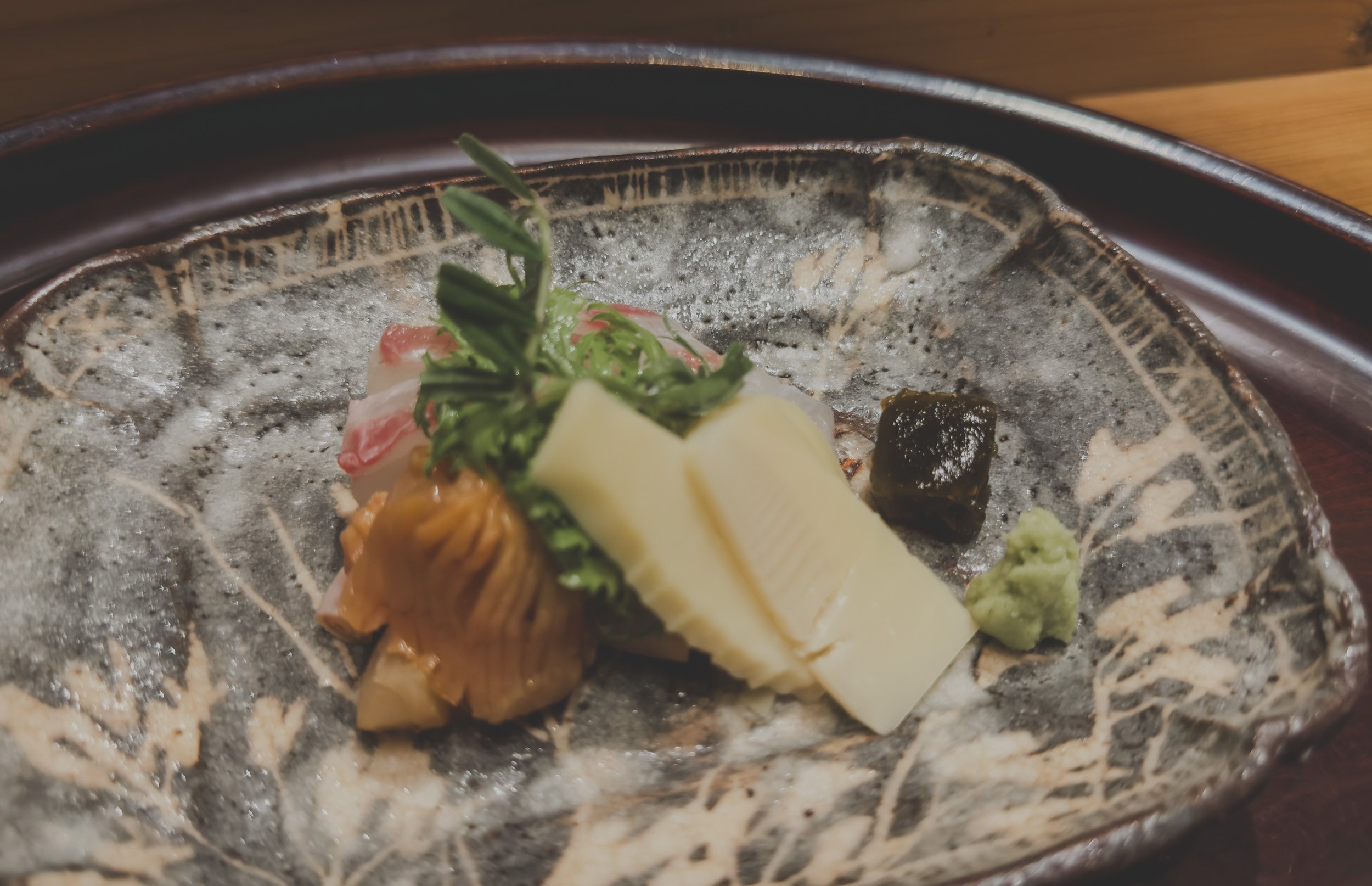
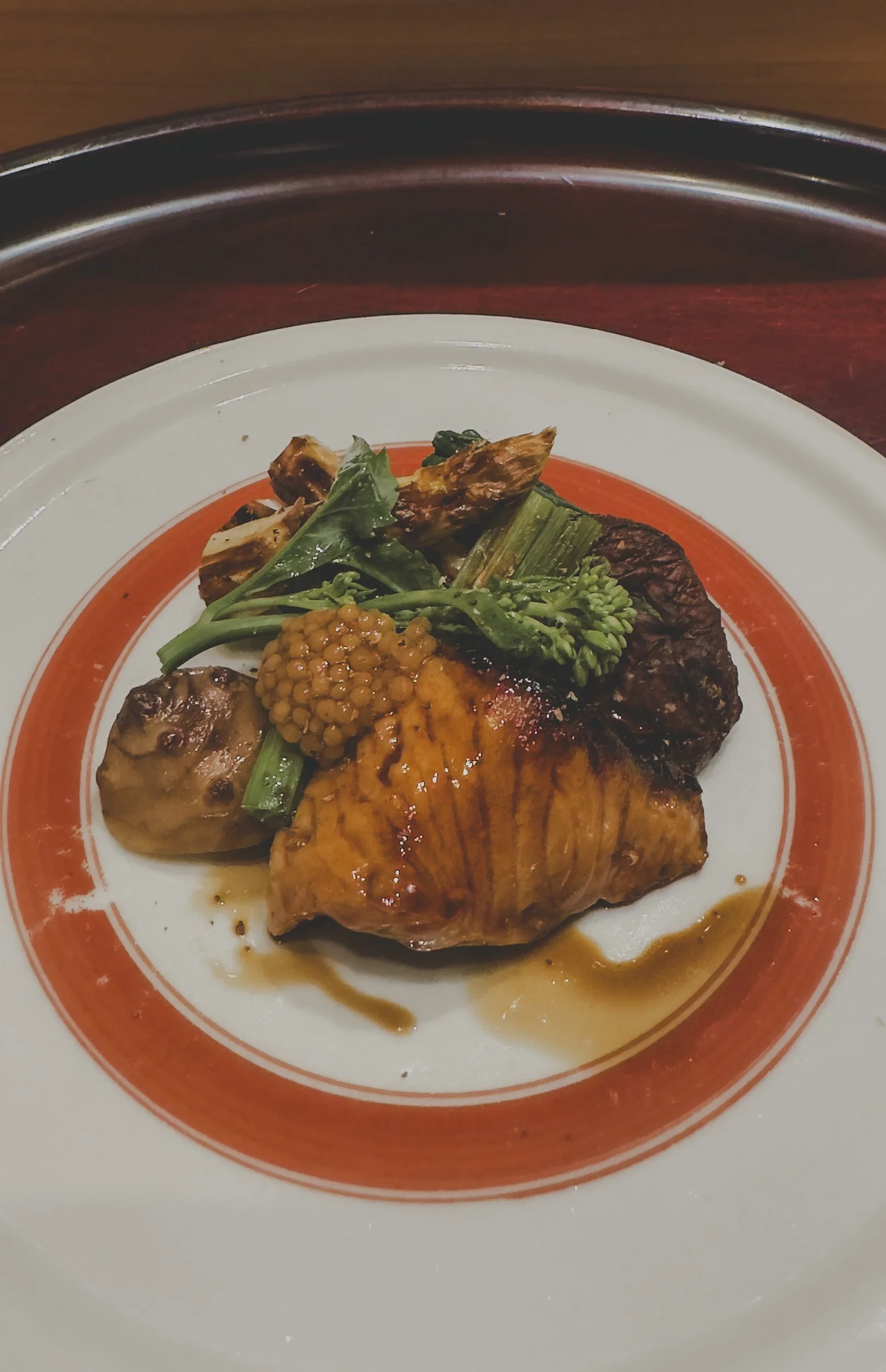
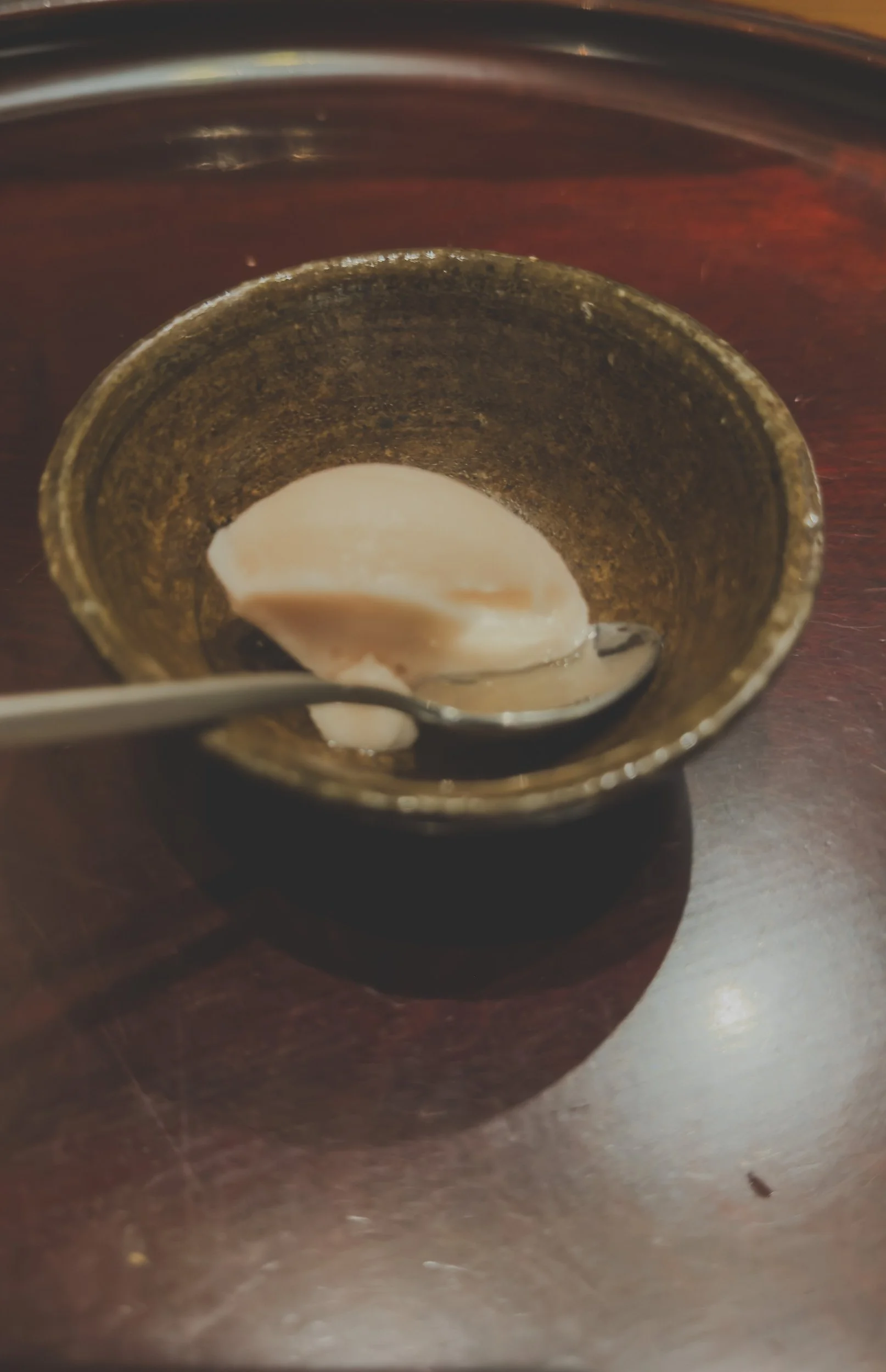
The Counter Experience: An Intimate Stage
The Counter Experience at Muroi is where the restaurant’s philosophy truly coalesces. Spanning the length of the main dining room, the single plank of hinoki wood provides a tactile, sensory connection to the chef’s work. The "feel" of the room is one of quiet, focused energy, where the low hum of conversation is balanced by the rhythmic sounds of the kitchen—the precise strike of a knife, the soft bubbling of a clay pot, and the delicate arrangement of garnish. It is a space designed for "unhurried" observation, where every seat provides a front-row view of the culinary theater.
The amenities of the dining room are subtle but technical. From the heated yutanpo (hot water bottles) provided at the feet of guests during the cool Kyoto winters to the atmospheric "Wa-akari" (traditional oil lamps) on the counter, every detail is engineered for physical comfort. The room feels grounded and permanent, with a layout that encourages a communal atmosphere among the small group of diners. It is an environment that respects the traveler's desire for privacy while offering the warmth of a shared, high-end meal.
The technology integration is hidden but effective. While the farmhouse looks historic, the climate control and acoustic insulation are precisely machined to ensure a comfortable environment regardless of the external weather. The lighting is meticulously curated to highlight the textures and colors of the food, ensuring that the "visual feast" is as impressive as the flavor profile. It is the ultimate choice for the traveler who finds peace in the organized beauty of a world-class kitchen, providing a sterile yet deeply inviting environment to experience the soul of Kyoto.
The Seasonal Highlight: The Vegetable Sashimi
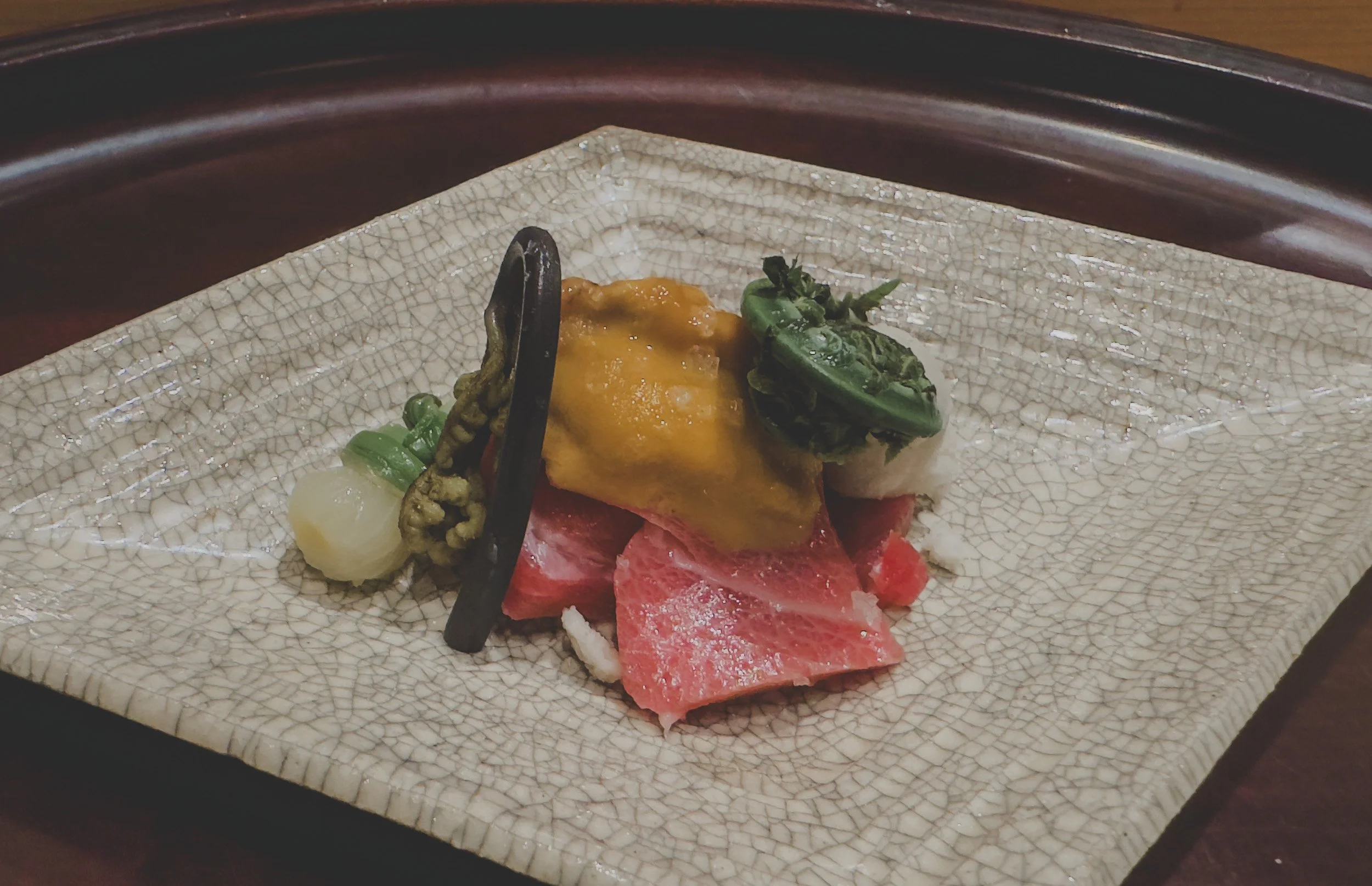
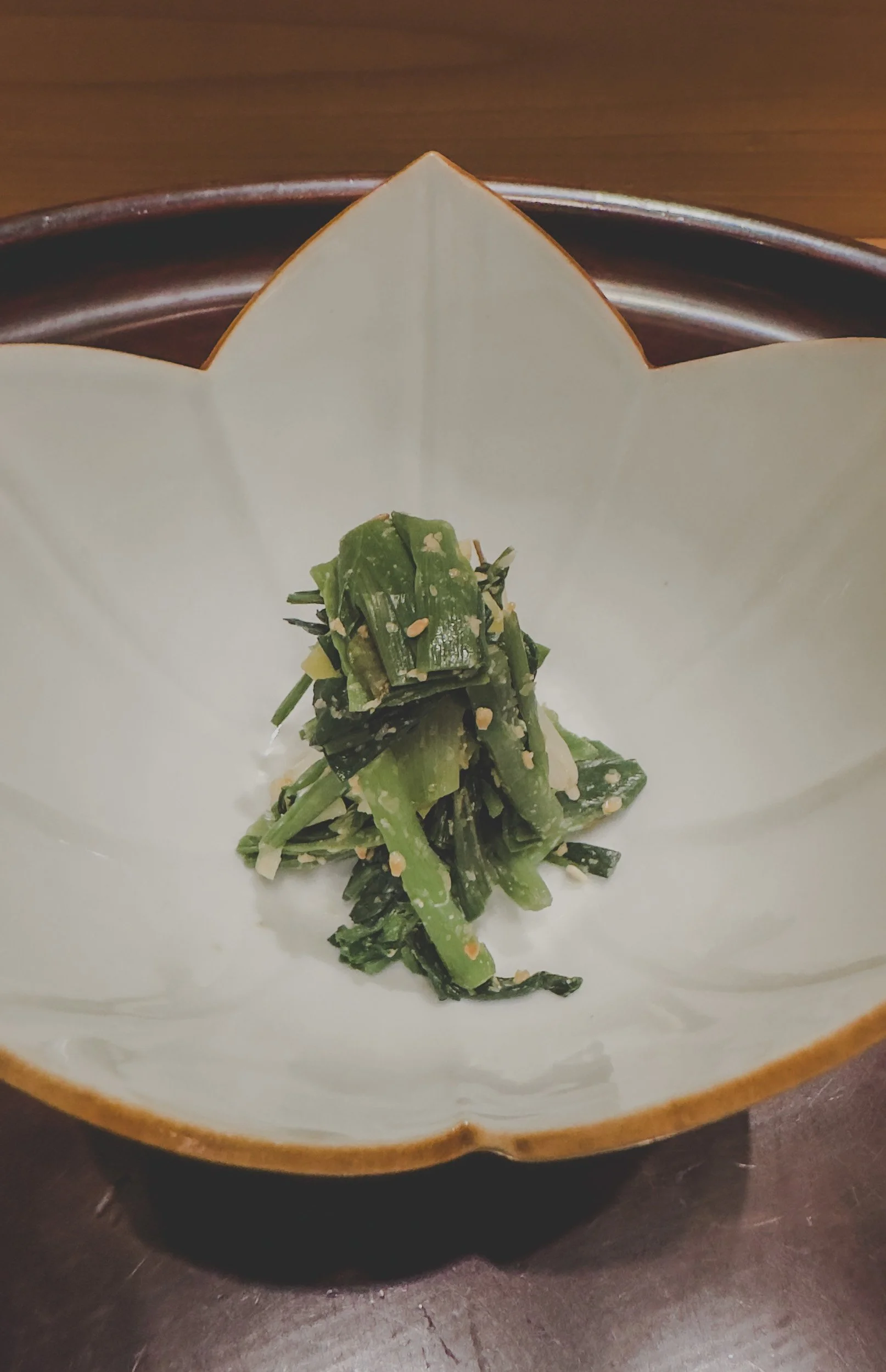
The Vegetable Sashimi course is a factual highlight and arguably the most technically impressive expression of the Muroi brand. Eschewing traditional fish-centric starters, the chef presents a vibrant array of 15 to 20 different Kyoto vegetables, each prepared with a different technique—some blanched, some raw, some lightly pickled. The design utilizes the natural shapes and colors of the Higuchi Nouen harvest to create a "painted" landscape on the plate. It is a highly usable and evocative dish that proves vegetables can hold the spotlight in a high-end menu.
The technical execution is a masterclass in flavor preservation. Every vegetable is sliced with the precision of a master sushi chef, and the seasoning is kept minimal—typically a brush of natural mineral water and a dash of artisanal salt—to allow the "honest" sugars of the earth to shine. The true "wow" factor is the variety; you might encounter rare varieties of turnip, the earthy sweetness of Kintoki carrots, or the crisp snap of Manganji peppers, all within a single course.
Functionally, the dish is designed to reset the palate and ground the diner in the current micro-season. The presentation, utilizing hand-crafted ceramic platters that mirror the textures of the mountains, ensures that the course feels like a physical piece of the Takagamine landscape. It is a dish that treats ingredients as a form of wellness, providing a sterile yet luxurious environment to explore the diversity of the Kyoto soil. This isn't just a starter; it’s a curated perspective on the bounty of the valley.
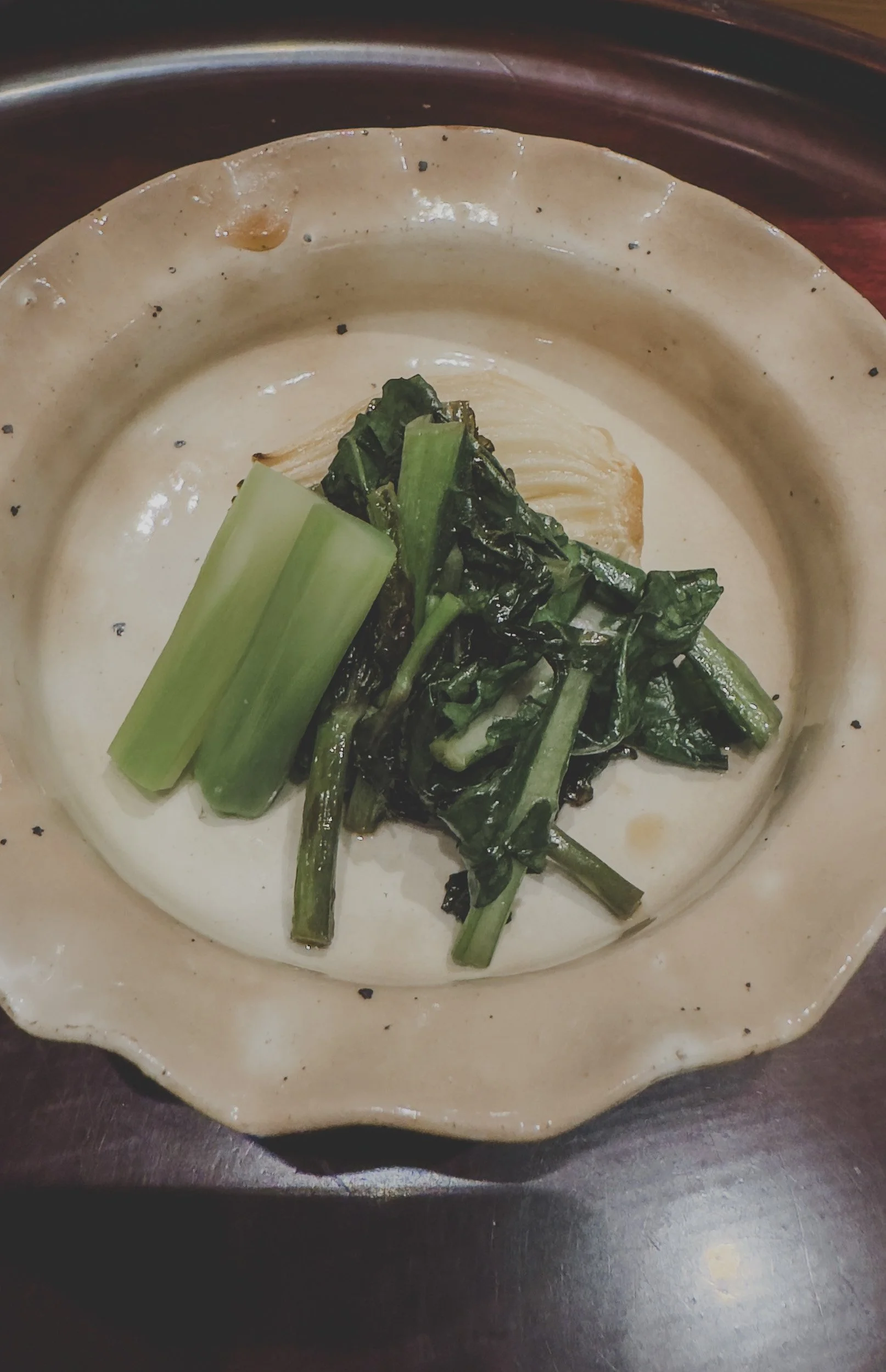
The Omakase Sequence: From Hassun to Hojicha
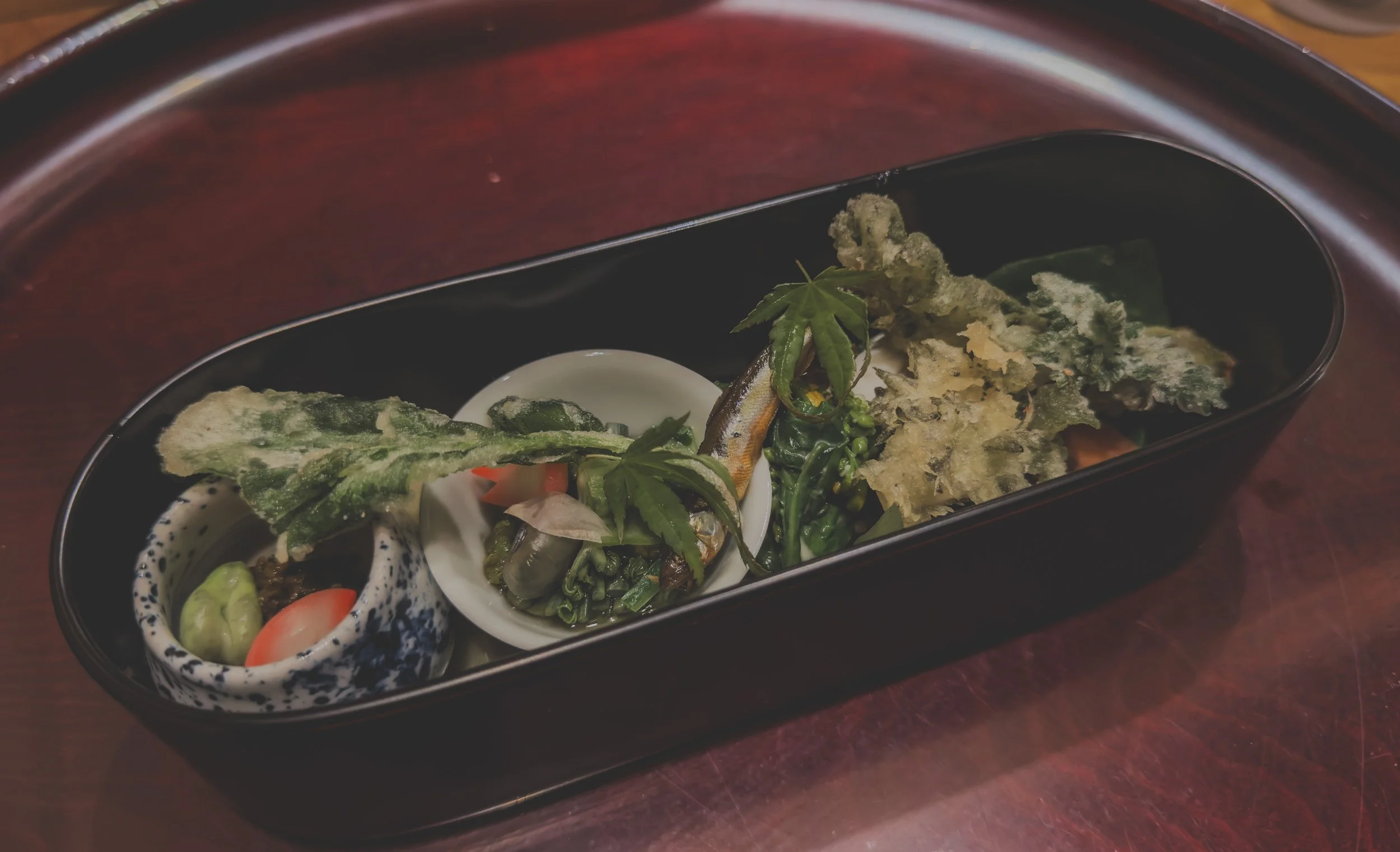
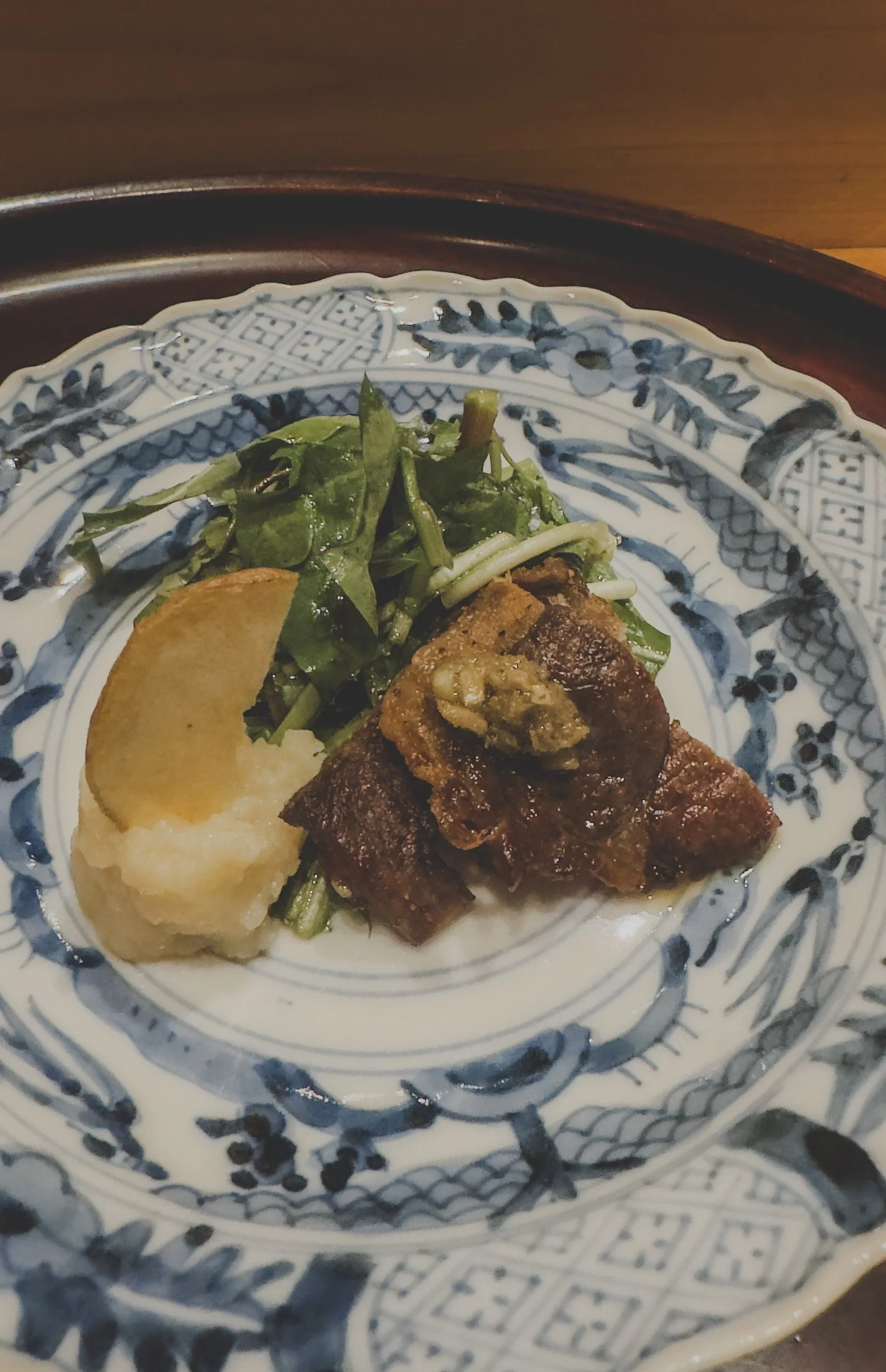
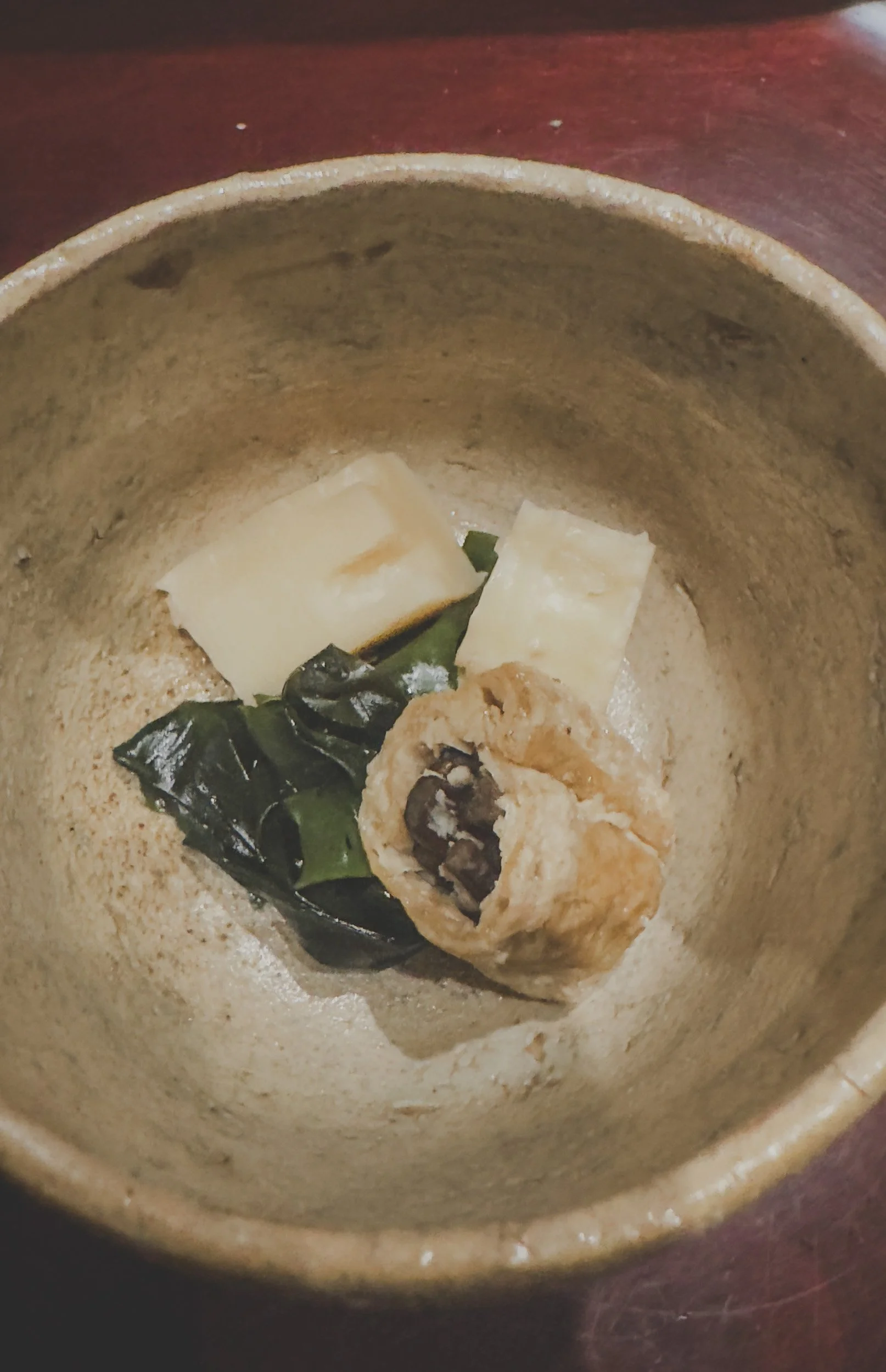
The dining experience is anchored by the Hassun, a factual centerpiece of the kaiseki journey that serves as a seasonal "snapshot." At Muroi, the Hassun is a technical exercise in variety, often featuring a dozen small bites—from grilled river fish and steamed lily bulbs to delicate mountain greens—all arranged on a single tray that mirrors the current month’s flora. The atmosphere is professional and vibrant, providing a high-energy start to the main courses in a room that frames the chef’s meticulous movements.
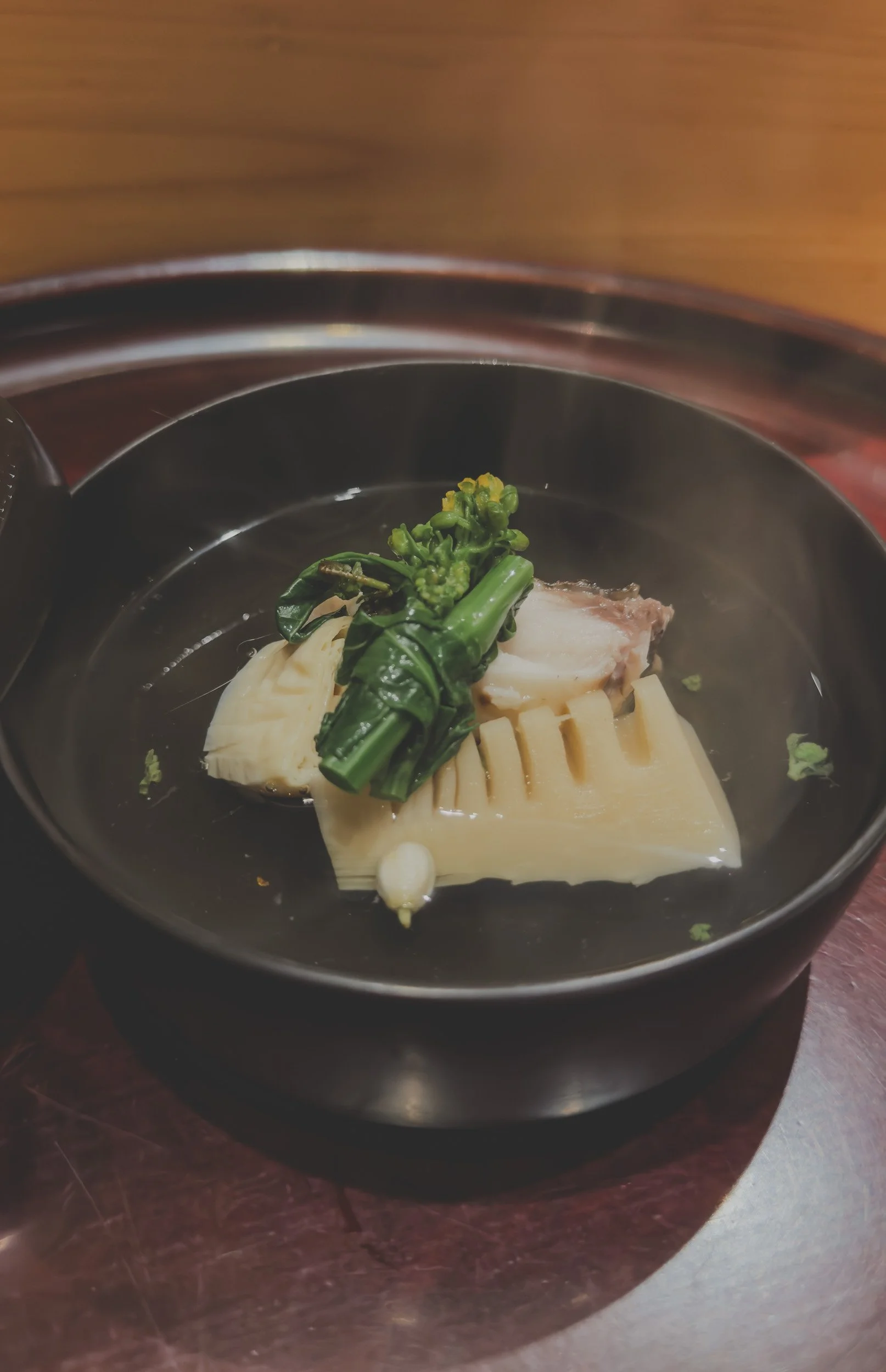
For the middle of the journey, the chef presents a grilled course—often a charcoal-broiled Tilefish (Amadai) or seasonal eel—that showcases the technical precision of his fire-management. The fish is expertly prepared to achieve a "formidable" skin crunch while maintaining a succulent, tender interior. This is followed by a series of simmered dishes where the mineral water from Kiyomi Pass transforms simple ingredients into complex, umami-rich broths. The technical execution here is flawless, emphasizing the "Special Relationship" between the water and the vegetables.
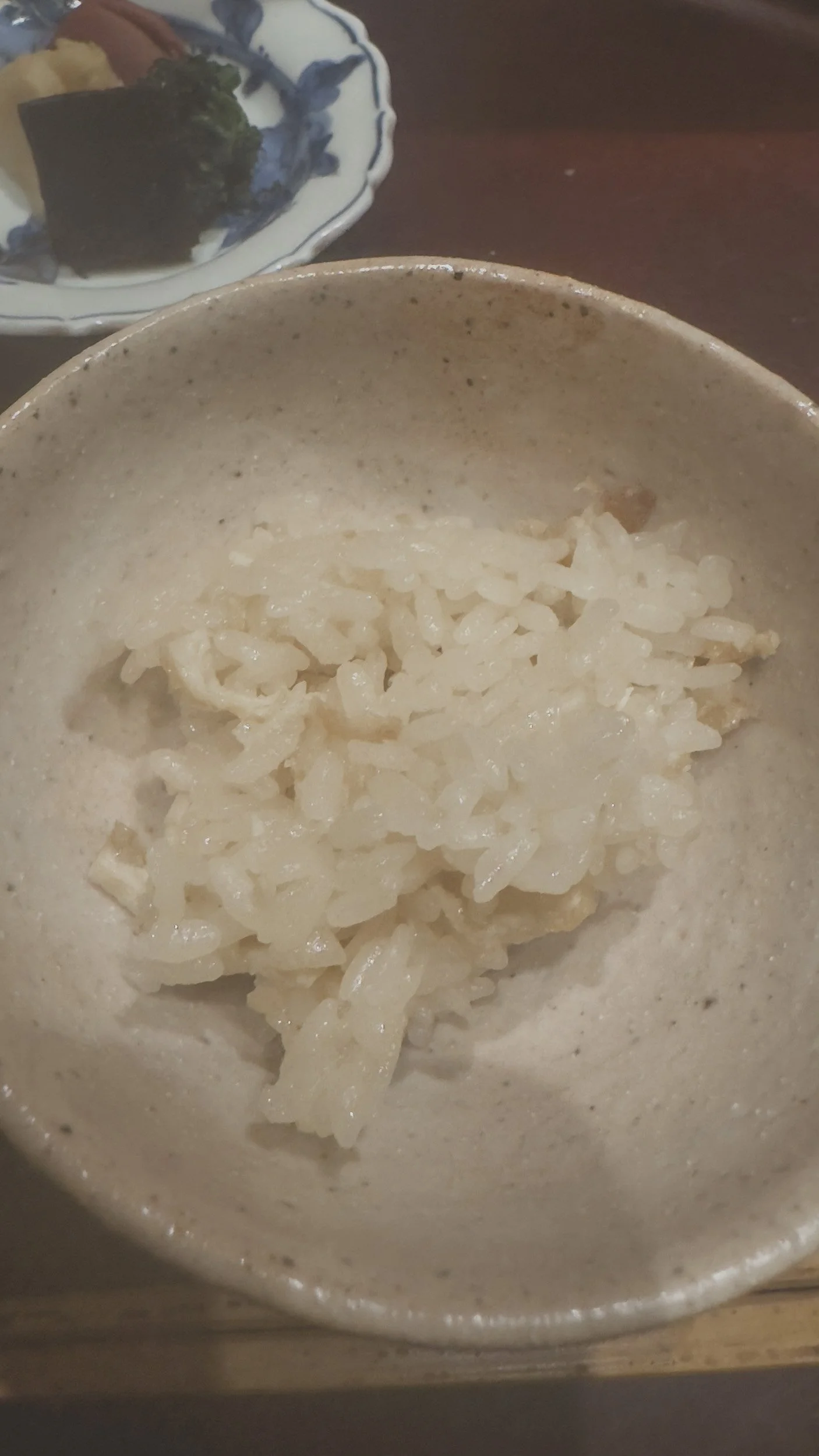
The Rice Course is the emotional peak of the meal. Prepared in a traditional donabe (clay pot) over an open flame, the rice is served in various stages—from the "niebana" (al dente, slightly sweet) to the fully cooked grains mixed with seasonal mushrooms or ginger. This is a technical standout of the Muroi experience, providing a high-energy and comforting conclusion to the savory dishes. The service is proactive, offering seconds (or thirds) and encouraging guests to linger over the aromatic steam of the clay pot.
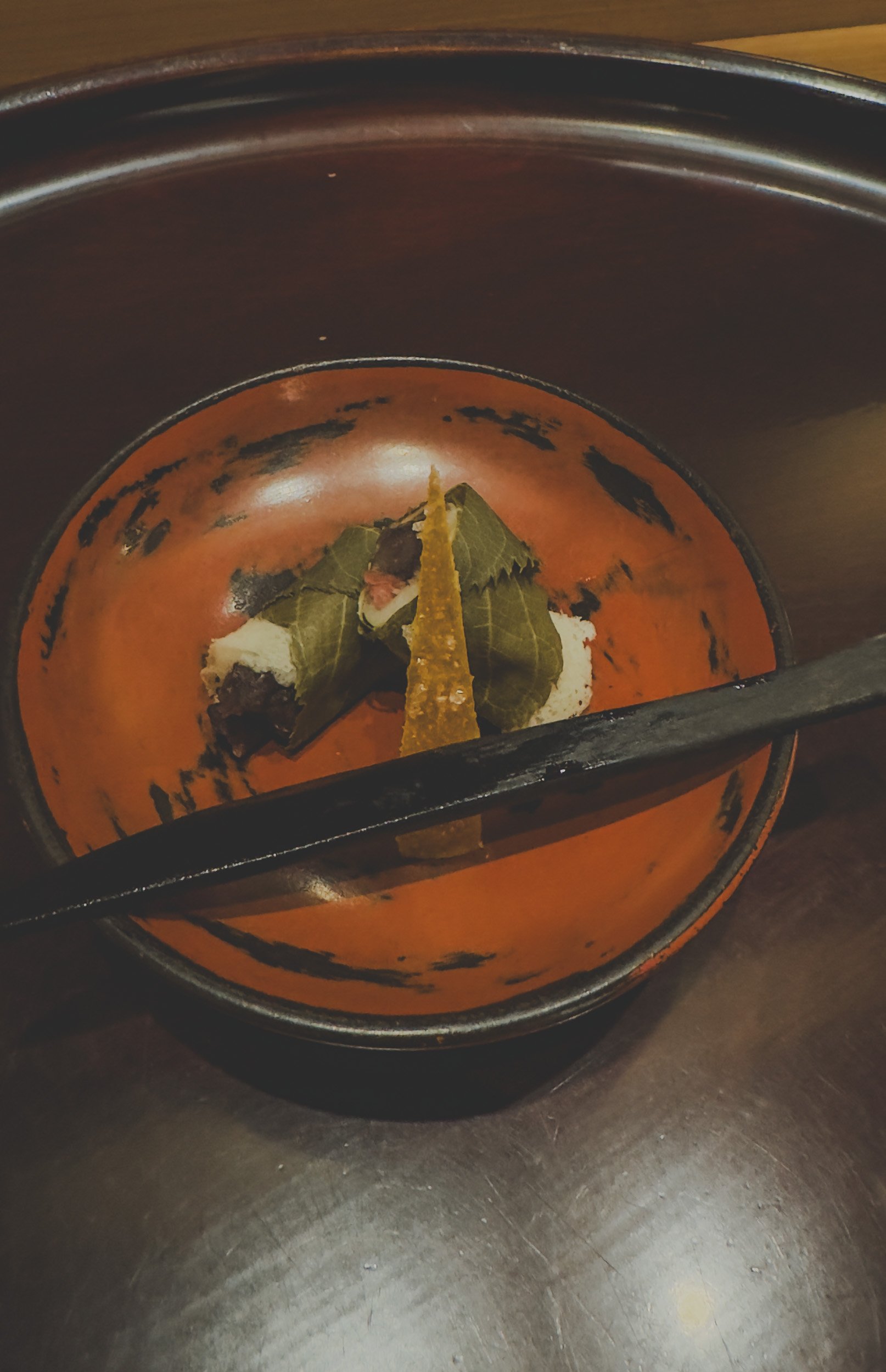
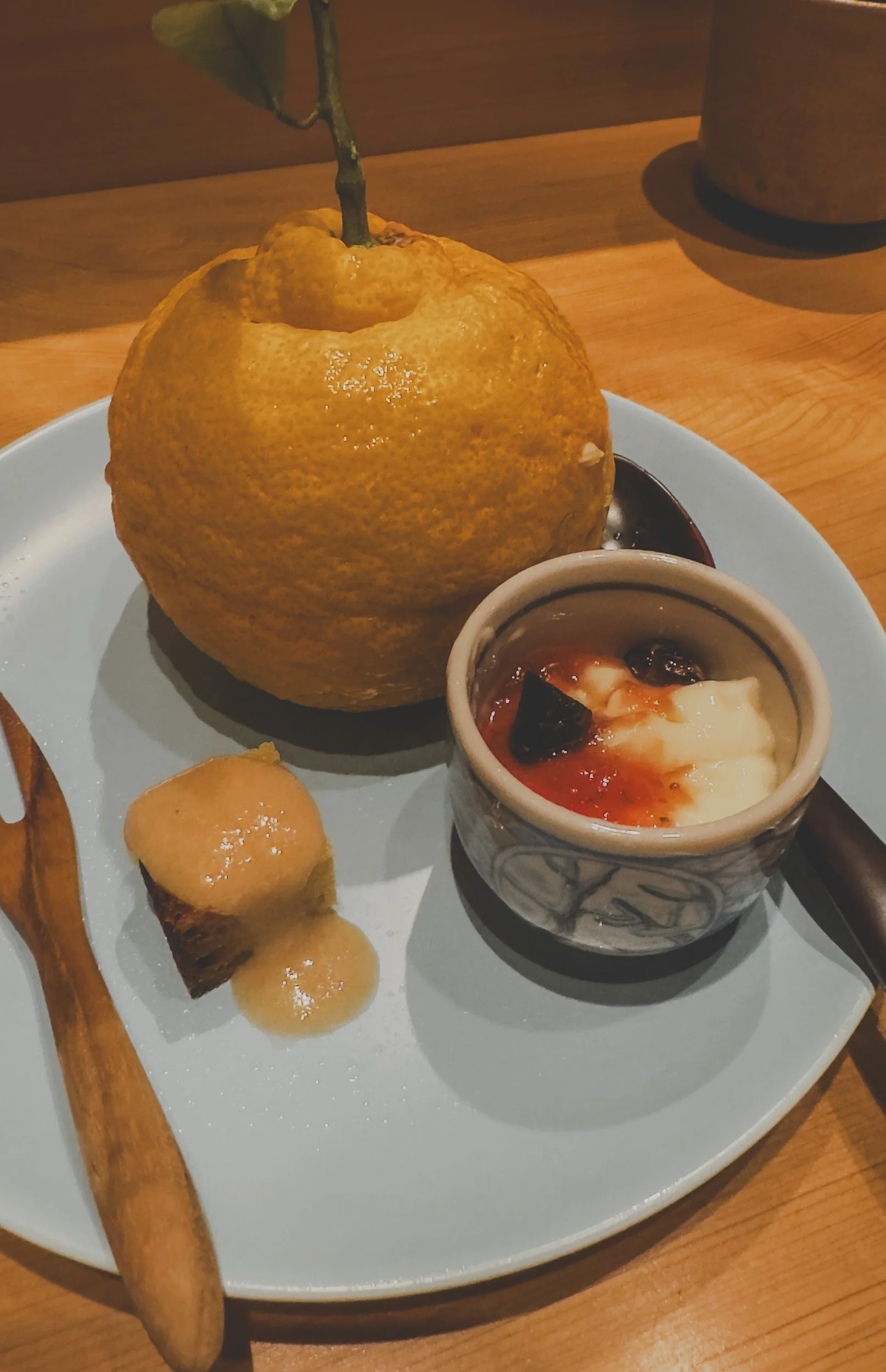
Finally, the dessert sequence is a polished and creative refresh. It typically features a seasonal fruit preparation followed by a bowl of freshly whisked matcha or a deep-roasted hojicha, served with a small, hand-crafted sweet. This ensures the meal ends on a high note of restoration, providing a sophisticated capstone to the evening. In 2026, the dining at Muroi is about "reliable excellence," providing a consistent and high-quality journey through the heart of the Kyoto landscape.
Curated for Class?
For those seeking authenticity and Japanese hospitality distilled to its finest, Muroi むろい is a definitive answer in 2026. The highlights are undeniable: the "vineyard-to-glass" equivalent of the Higuchi vegetable connection, the high-performance English engagement of the chef, and the absolute historical charm of the Meiji-era farmhouse. The lowlights are minor—primarily the location’s distance from the city center and the factual constraint of the 10-seat counter which requires booking weeks in advance—but even this is managed with characteristic Muroi grace.
I highly recommend this property for those looking for that Kyoto quality - Muroi captures the contemporary, "active" spirit of Kyoto like no other. If you are looking for the future of Japanese luxury—understated, connected, and impeccably efficient—this farmhouse in the hills is your definitive home.
The Muroi むろい experience by itself is amazing - pair that with an unbeatable agrarian perspective and a boutique-style hospitality that makes every meal feel remarkably personal. While it eschews the formal rigidity of its peers, the restaurant delivers a high-performance experience centered around its legendary vegetable sashimi and a philosophy that captures the very best of Kyoto’s elemental soul.
Curated for Class Final Score | 43/50
Muroi むろい is a premier Kyoto destination that redefines modern kaiseki by centering its high-performance menu on the legendary vegetables of the neighboring Higuchi farm. Set within a beautifully restored 140-year-old farmhouse, the experience offers a rare balance of world-class technical precision and the approachable, English-speaking hospitality of Chef Shigeru Muroi.
Service: 8.5/10
Atmosphere: 8.5/10
Food Quality: 8.5/10
Mastery of Taste(s):9/10
Value for Money: 8.5/10