
Restaurant Review: Tempura Endo Yasaka (North)
Introduction
Tempura Endo Yasaka North remains a fixed star of high-end tempura. Located in the historic Gion district, this establishment is housed in a refined Sukiya-zukuri building that once functioned as a traditional teahouse. In 2026, it continues to define the "Kyoto-style" tempura experience, moving away from the heavy, egg-rich batters of Tokyo toward a translucent, feather-light coating that highlights the fundamental sugars of the local produce.
What distinguishes this specific North branch is its sense of intimacy within a legendary brand. While the main house is a sprawling labyrinth of private rooms, the North building offers a more focused, counter-centric atmosphere that allows for direct engagement with the masters of the craft. It represents a significant investment in culinary heritage, providing a restorative environment where the "detox-retox" balance is struck through the purity of the ingredients and the surgical precision of the frying technique.
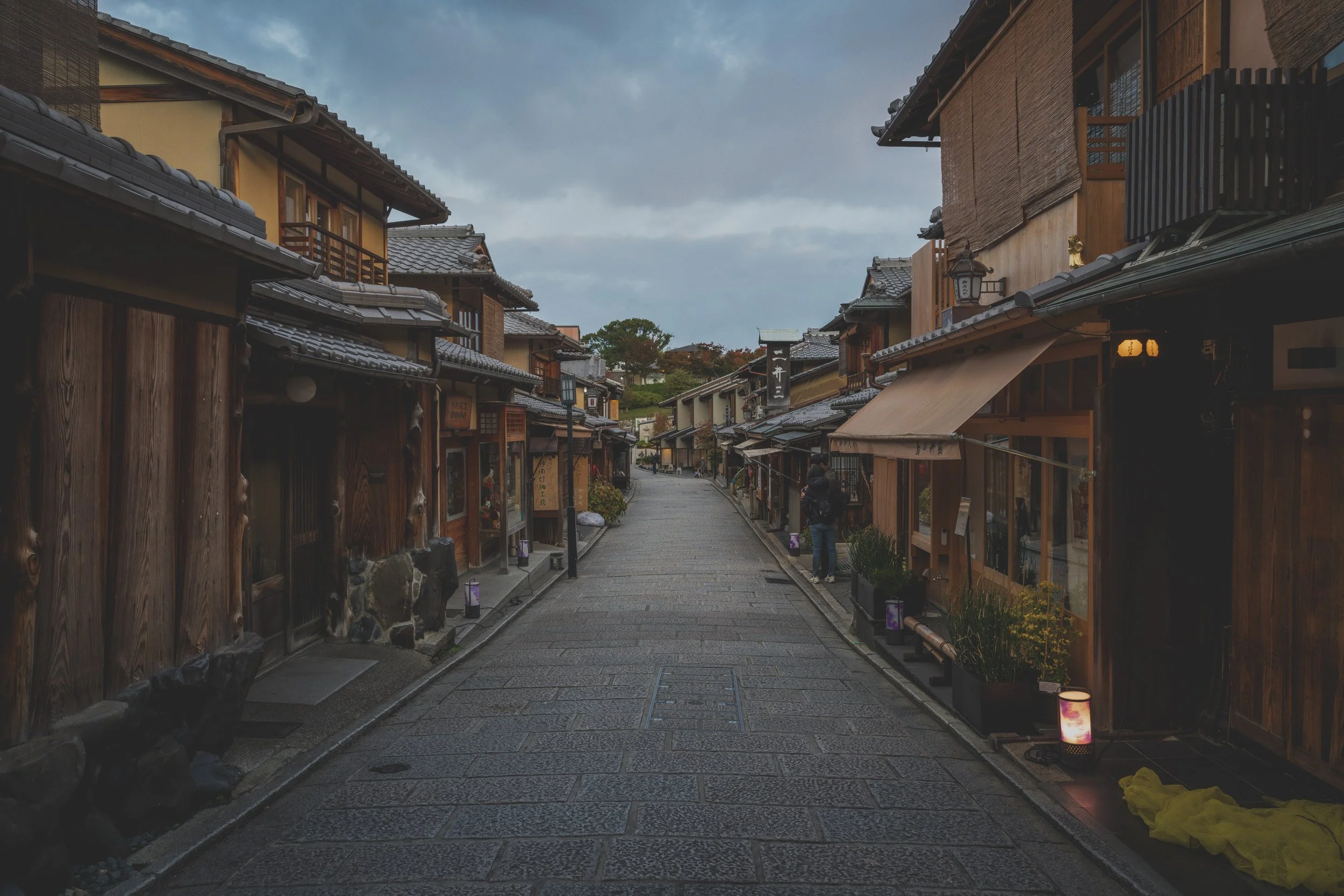
Location: The Gion Epicenter
Strategically positioned near the iconic Yasaka-no-to Pagoda and the ancient Kennin-ji Temple, Tempura Endo Yasaka North occupies a location that is demonstrably superior for those navigating the cultural heart of the city. It sits on a quiet, atmospheric lane that feels remarkably removed from the selfie-stick crowds of nearby Shijo-dori, yet it is a mere five-minute stroll from the district’s most storied geiko and maiko tea houses. This positioning allows you to treat the restaurant as a central pivot point for a day of temple exploration and a night of high-end indulgence.
Beyond the historical landmarks, the location is defined by its proximity to the Kamo River and the vibrant culinary pockets of Pontocho. For the luxury traveler, this means the restaurant acts as a gateway; you can easily oscillate between the traditional tranquility of the Kennin-ji rock gardens and the sophisticated nightlife of Gion. In 2026, this neighborhood remains the definitive vantage point for the "Old Kyoto" aesthetic, providing a backdrop that enhances the provenance of the meal.
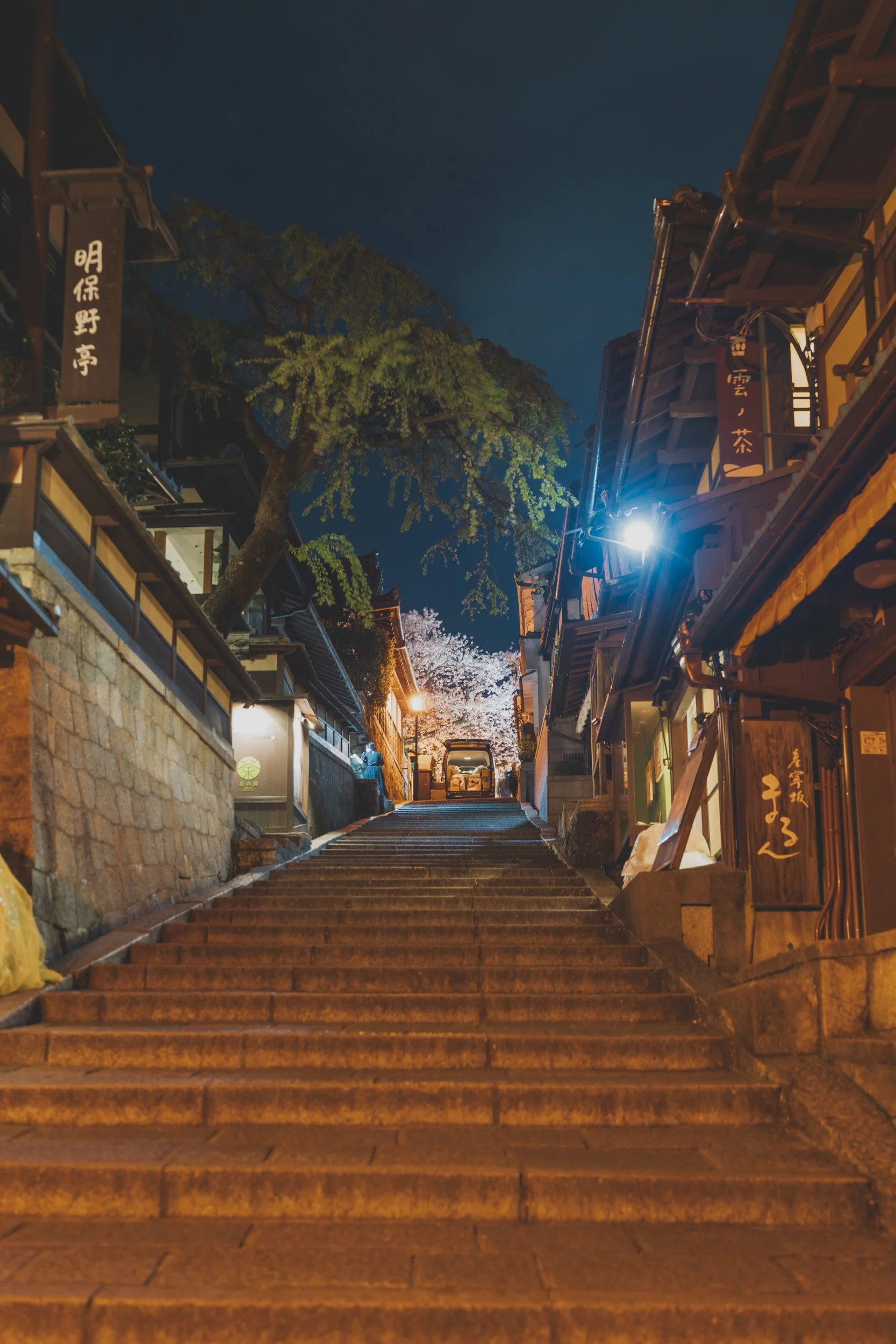
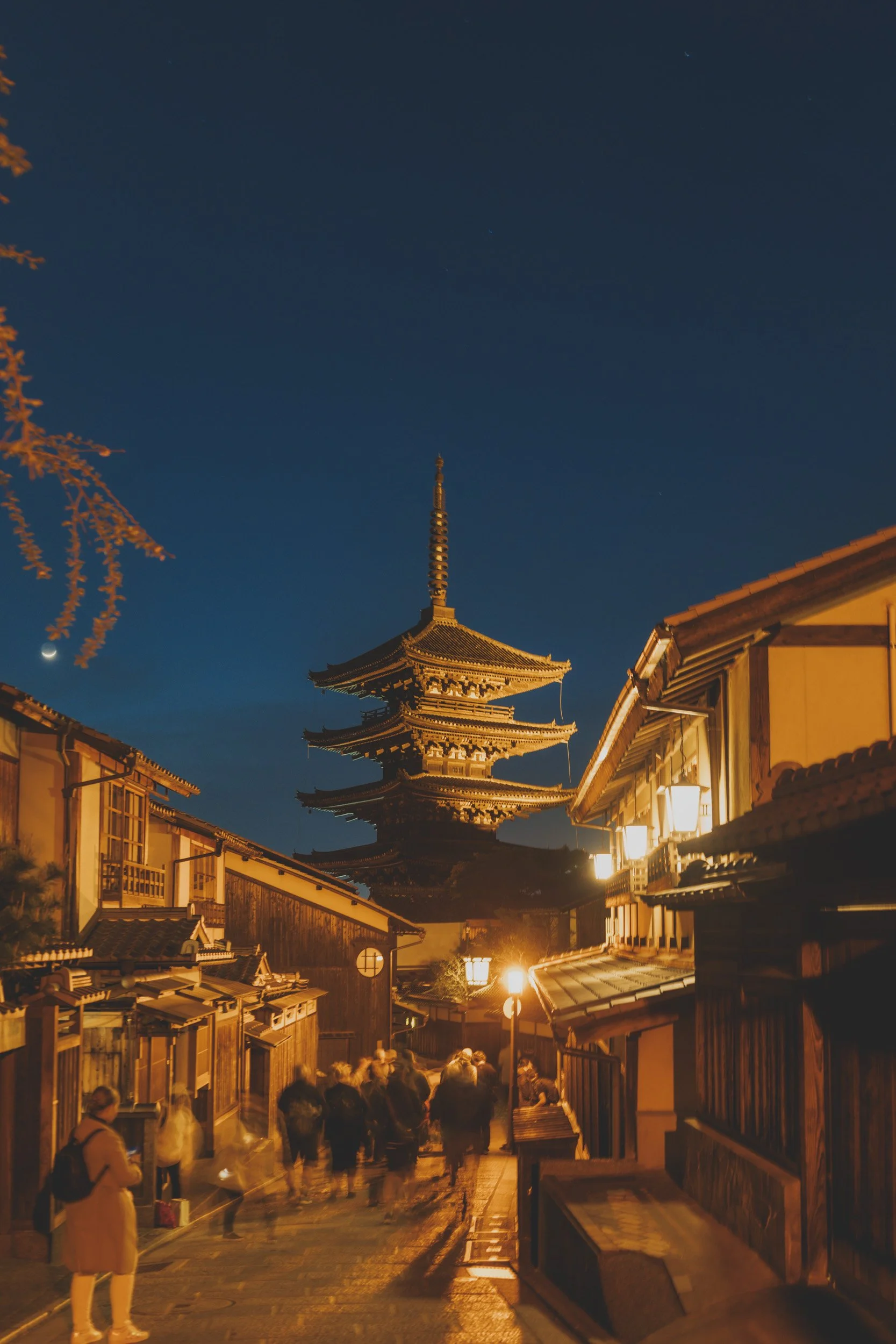
Restaurant Grounds: Traveling Back in Time
The grounds of the North building are an exercise in architectural preservation and "indoor-outdoor" harmony. The structure itself is a masterpiece of Japanese carpentry, featuring the delicate latticework and sliding paper screens that define the Sukiya style. Unlike the monolithic glass towers of the newer city hotels, the grounds here are an extension of the earth, utilizing natural stone paths and a small, meticulously curated garden that frames the entryway.
The layout is deconstructed to maximize the guest's visual connection to the kitchen. The centerpiece of the interior is a massive, curved counter crafted from a single slab of wood, positioned to let the natural light from the courtyard gardens illuminate the frying station. This design is unique in its transparency, moving away from the "hidden kitchen" model to create an environment where the environment is the primary protagonist. It is a landscape that demands you slow down and observe the shifting light as the sun sets over the Gion rooftops.
What to Expect
The tempura experience at the North building is a study in thermal precision. The chefs utilize a proprietary blend of pure cottonseed oil, which is changed frequently to ensure the fry remains incredibly clean and devoid of any lingering grease. The "feel" of the meal is one of cerebral lightness; the batter is almost invisible, acting only as a conduit for the intense heat to steam the ingredients in their own juices. It is a space designed for "unhurried" observation, where every piece is served at its absolute peak of crispness.
Even with the most advanced ventilation and the use of premium cottonseed oil, a tempura restaurant is a battleground of cooking odors. Many traditional teahouse-turned-restaurants use a specific type of incense called Kō-bun-boku (intended to smell like plum blossoms) to neutralize any heavy, oily scents in the air. This ensures that the environment feels crisp and "sterile" rather than smelling like a commercial kitchen.
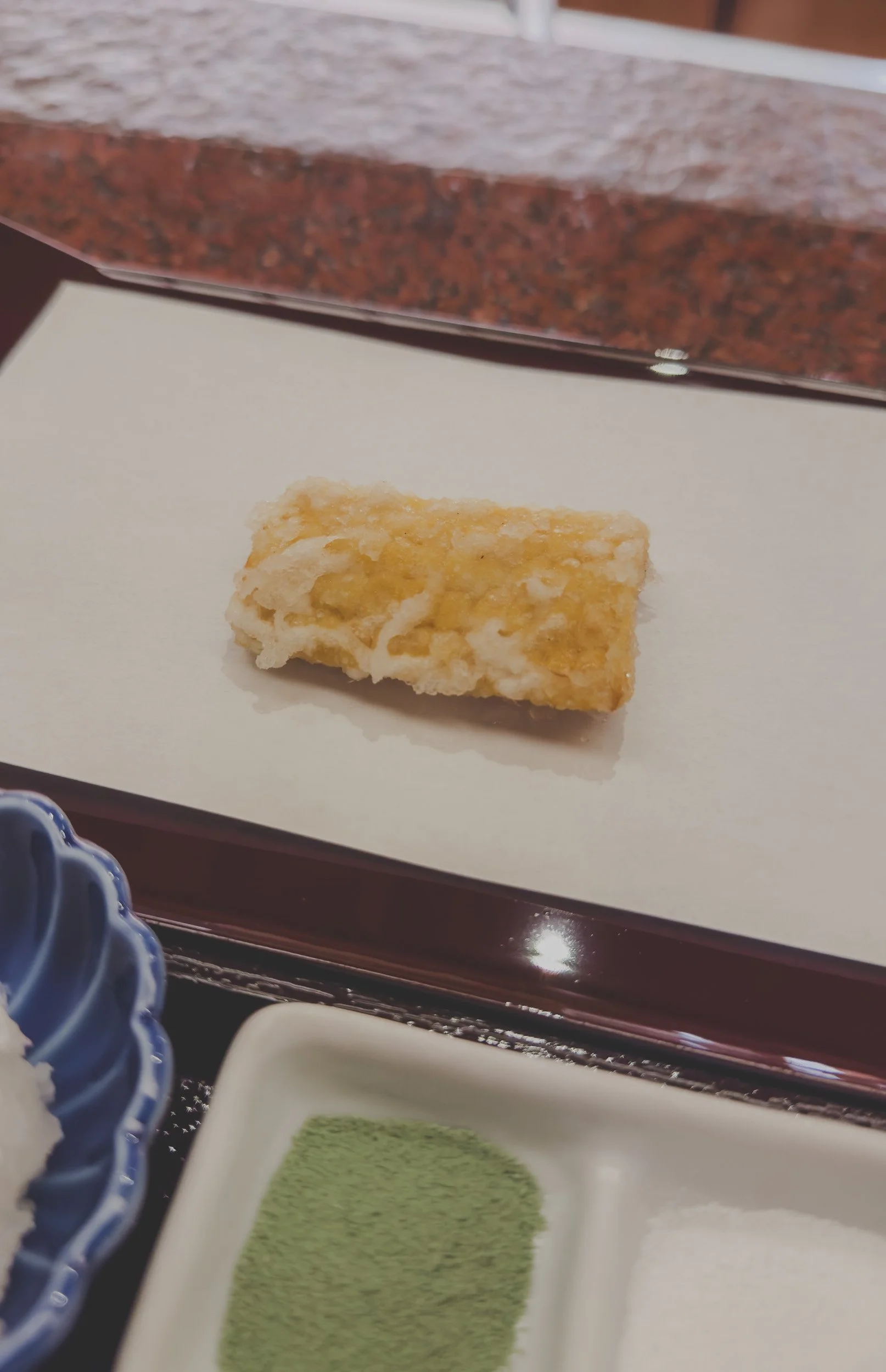
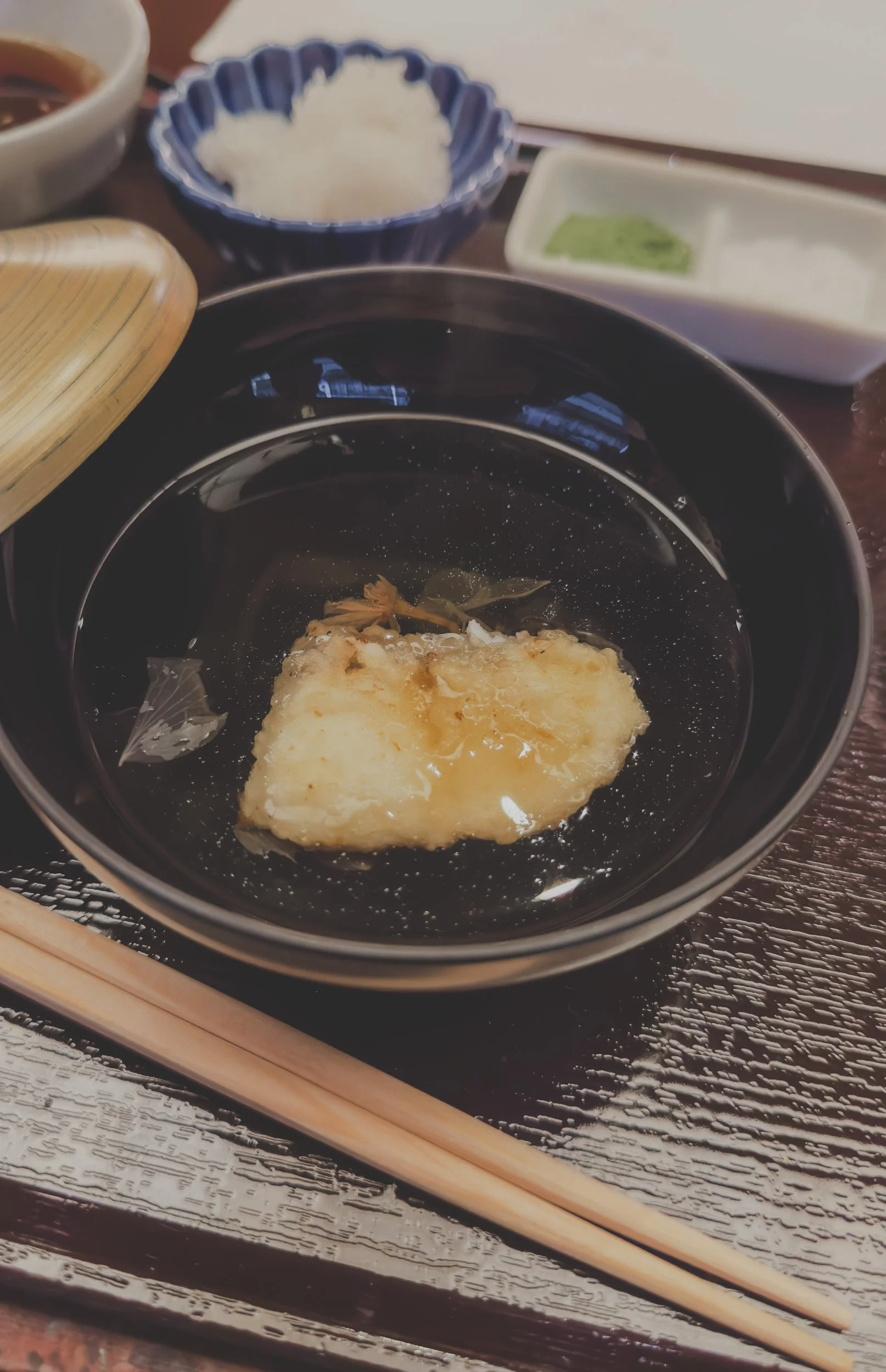
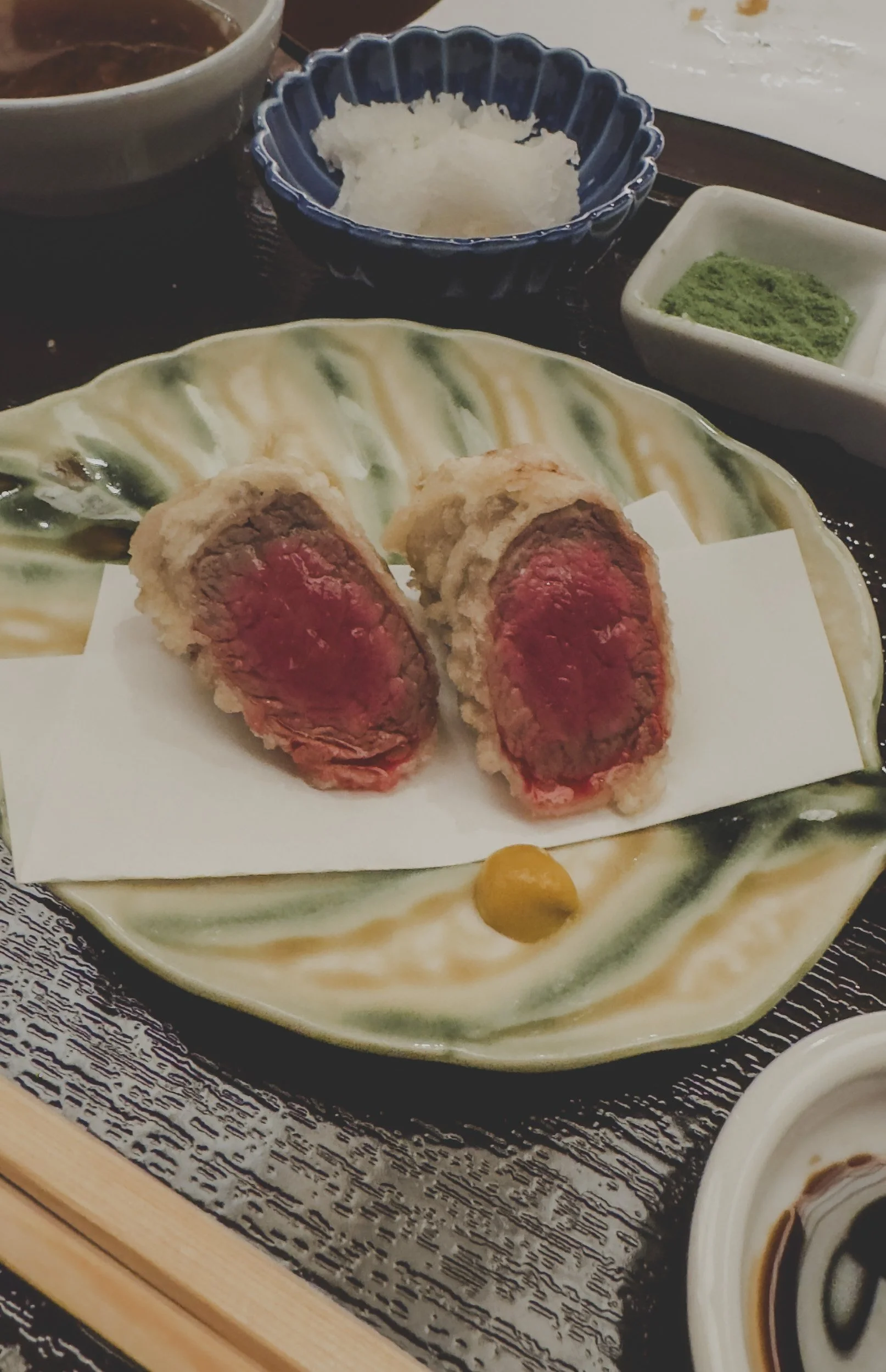
The amenities of the counter are subtle but technical. You are presented with a triad of dipping options: a delicate dashi-based tentsuyu, artisanal sea salt, and a dash of matcha salt. The organization of the space is kept exceptionally neat, with the chef’s movements appearing almost robotic in their efficiency. It is a high-performance environment that respects the traveler’s desire for both productivity (in terms of experiencing as many flavors as possible) and restorative quiet.

An Endless Course of Tempura
I hope you’re hungry, because its a LOT OF FOOD.
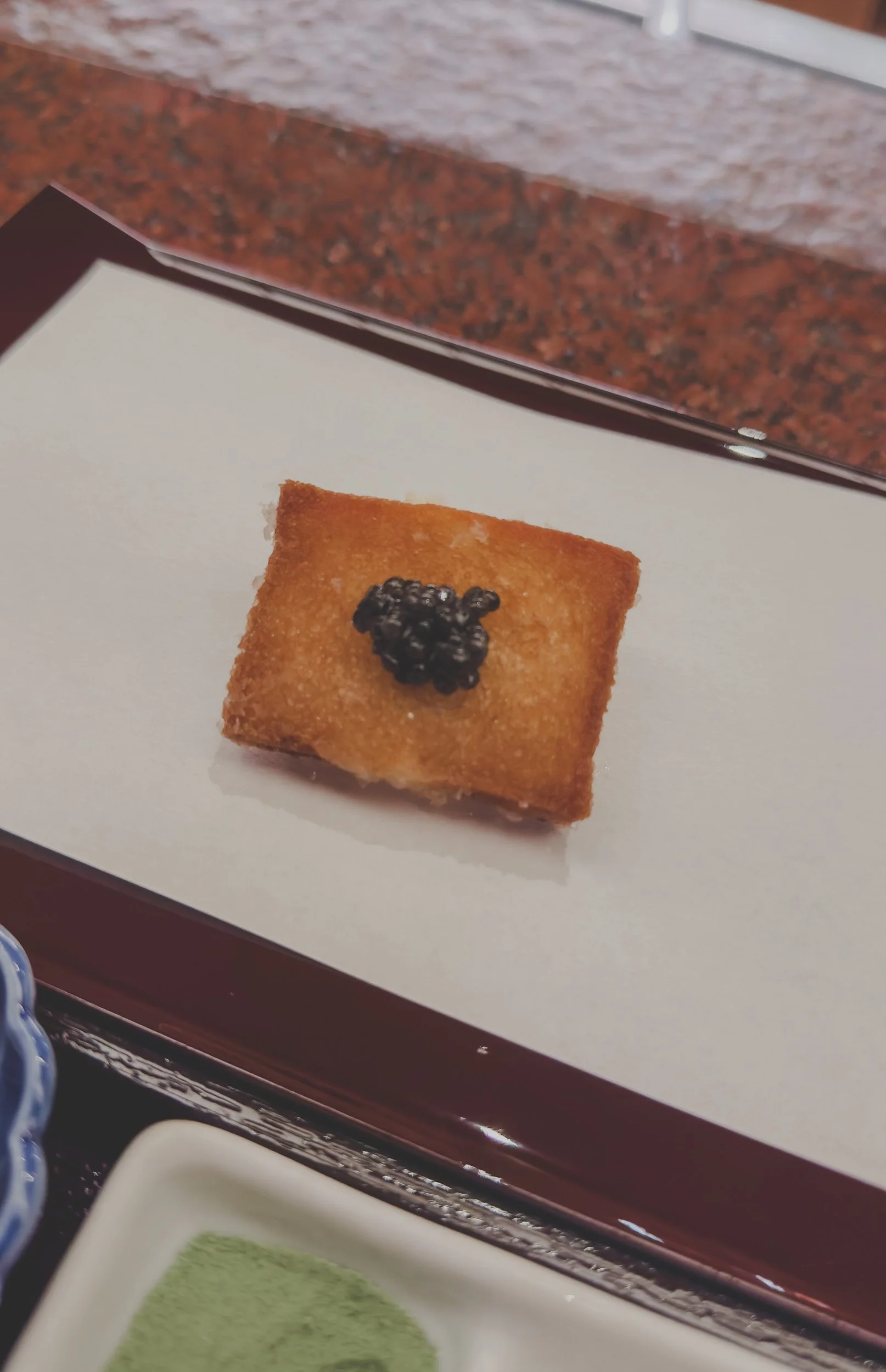
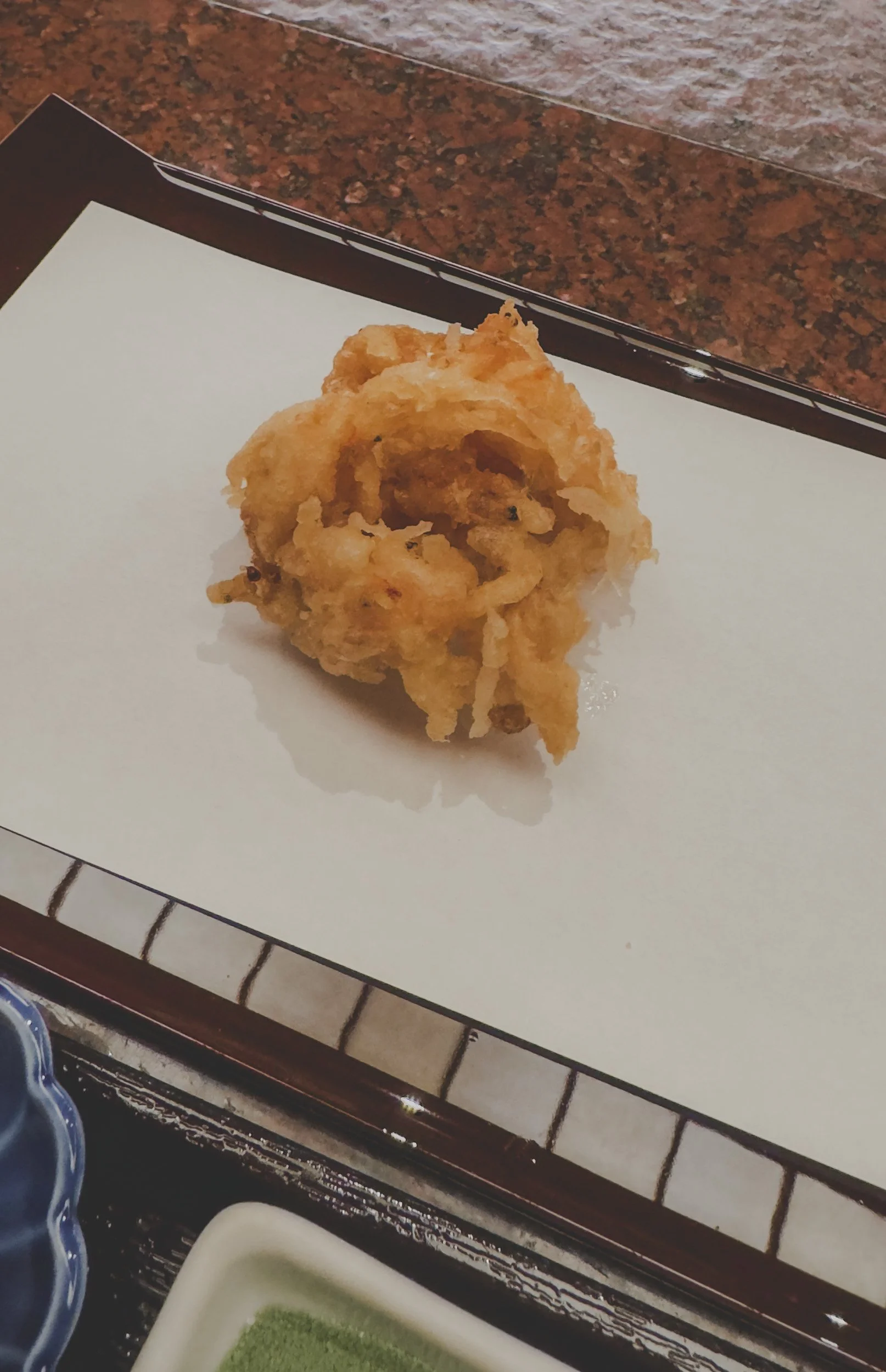
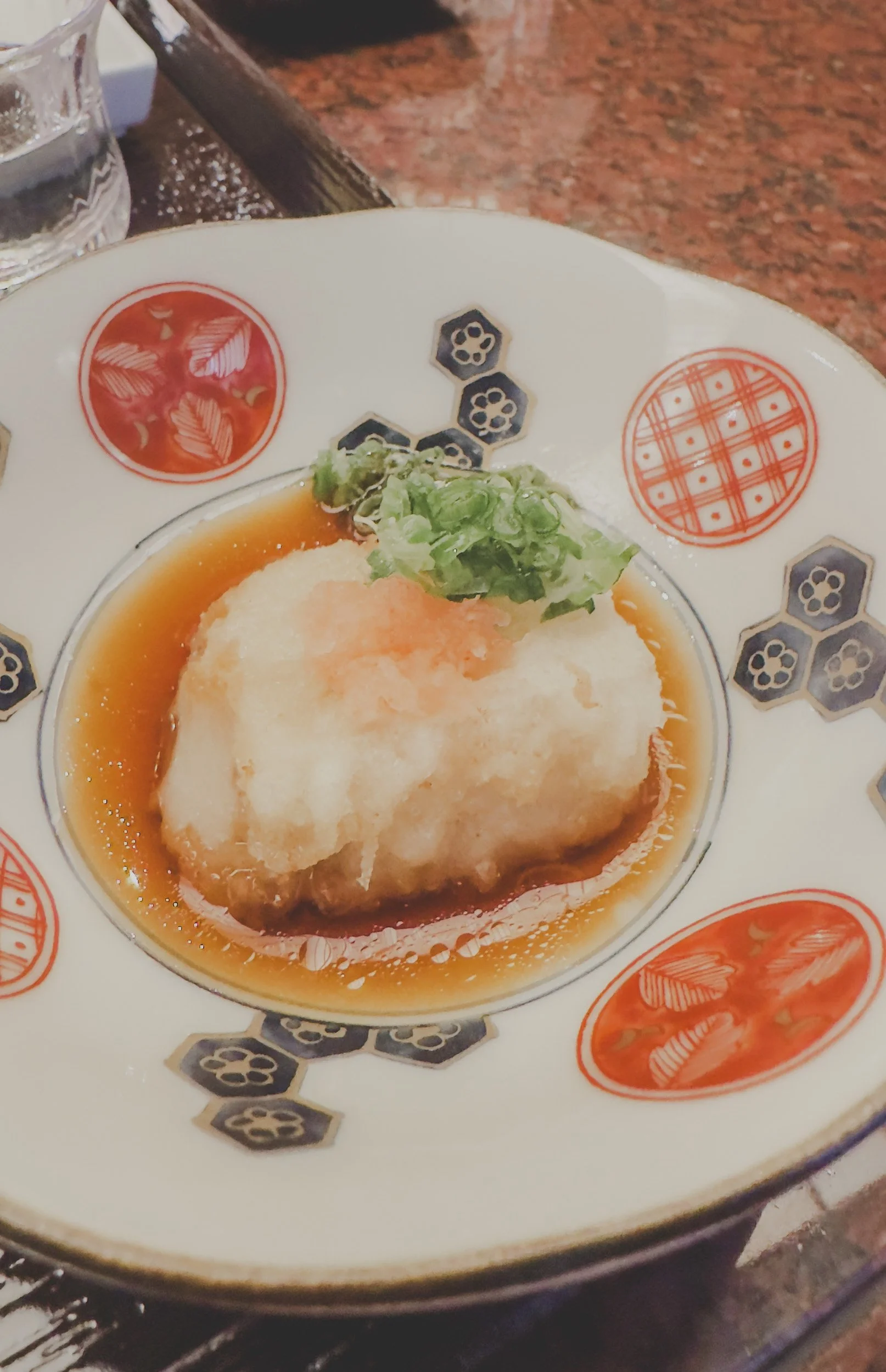
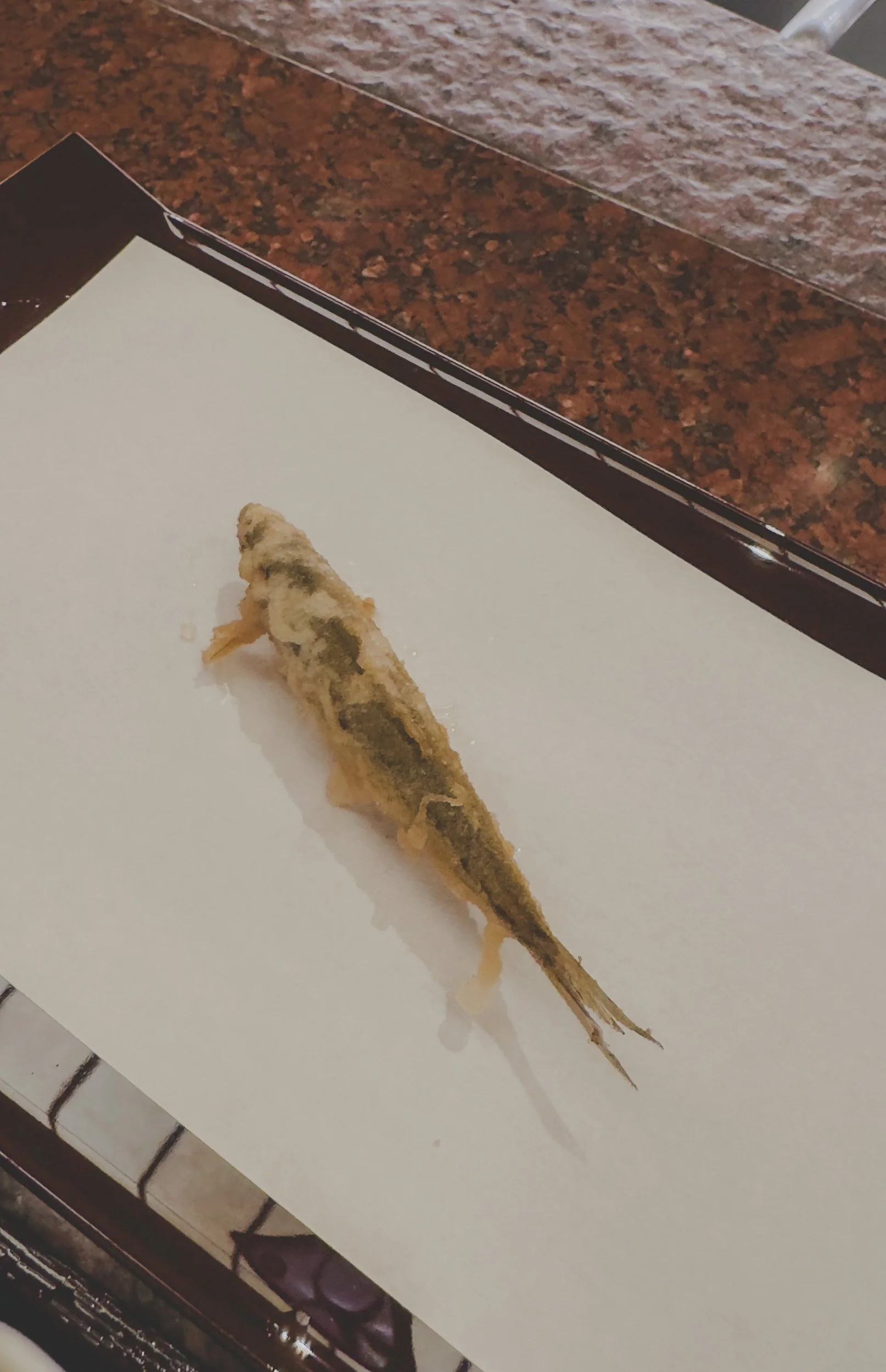
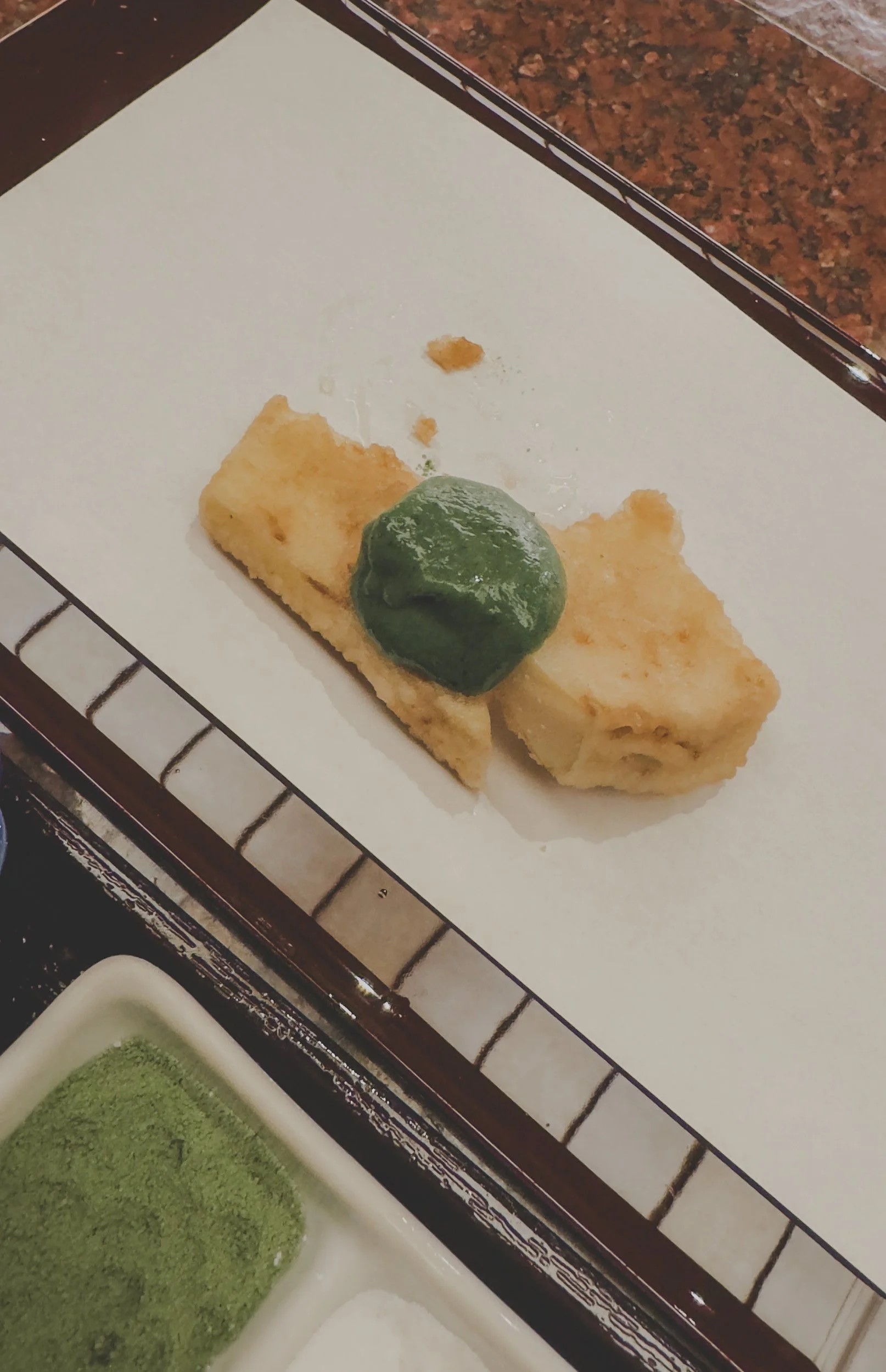
The 15-item (yes, that’s right) marathon at Tempura Endo Yasaka North is a rhythmic, high-spec progression that treats deep-frying as an act of thermal preservation. The journey begins with a series of cold and warm openers designed to sharpen the palate before the oil takes over. You likely started with a focused selection of seasonal sashimi—perhaps Amadai or Tai—served with hand-grated wasabi that provides a bright, clean contrast to the richer courses ahead. This is usually paired with a small basket of Kyoto-style appetizers, such as simmered mountain greens or silk-textured sesame tofu, setting a grounded, traditional tone for the evening.
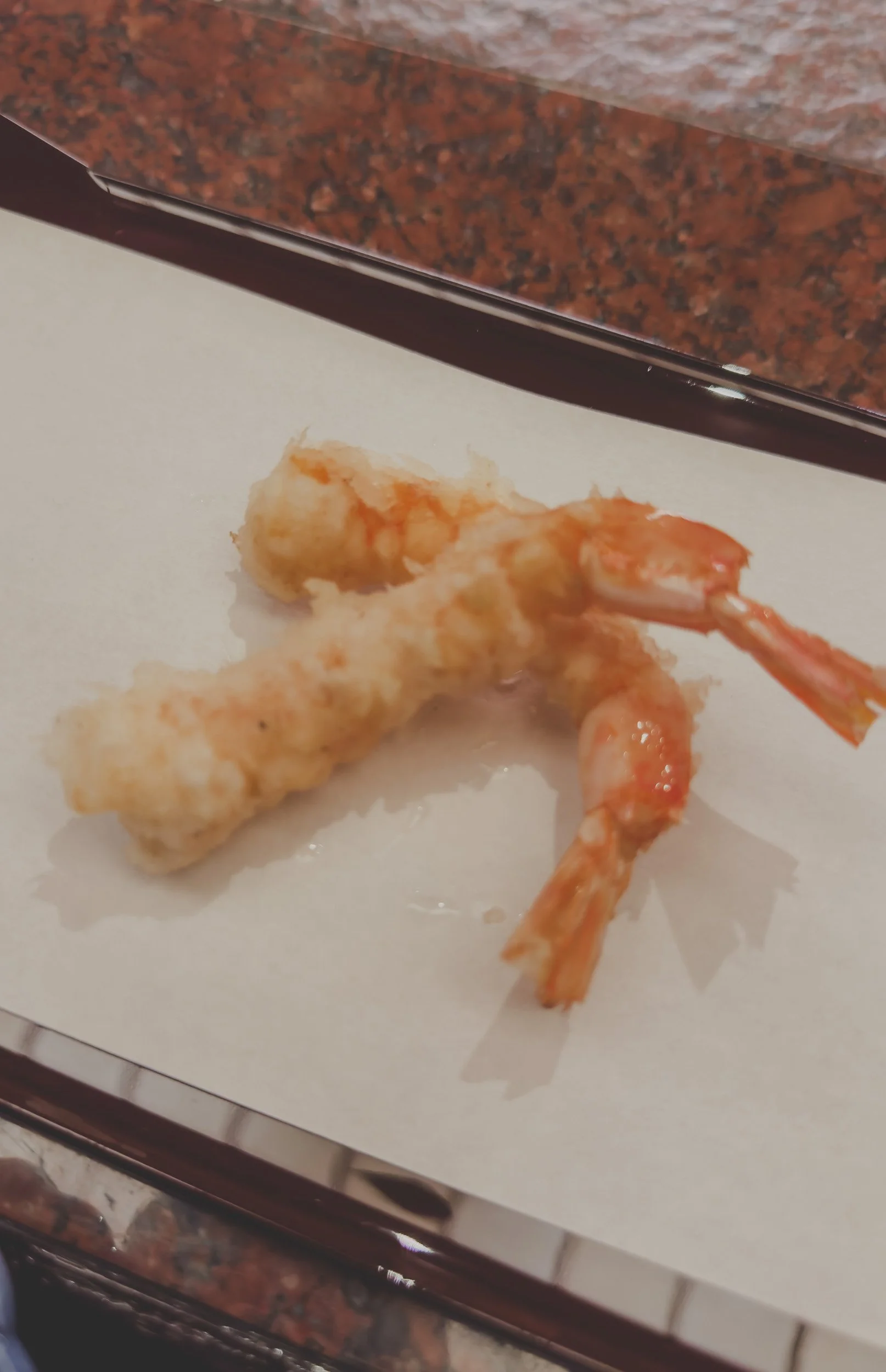
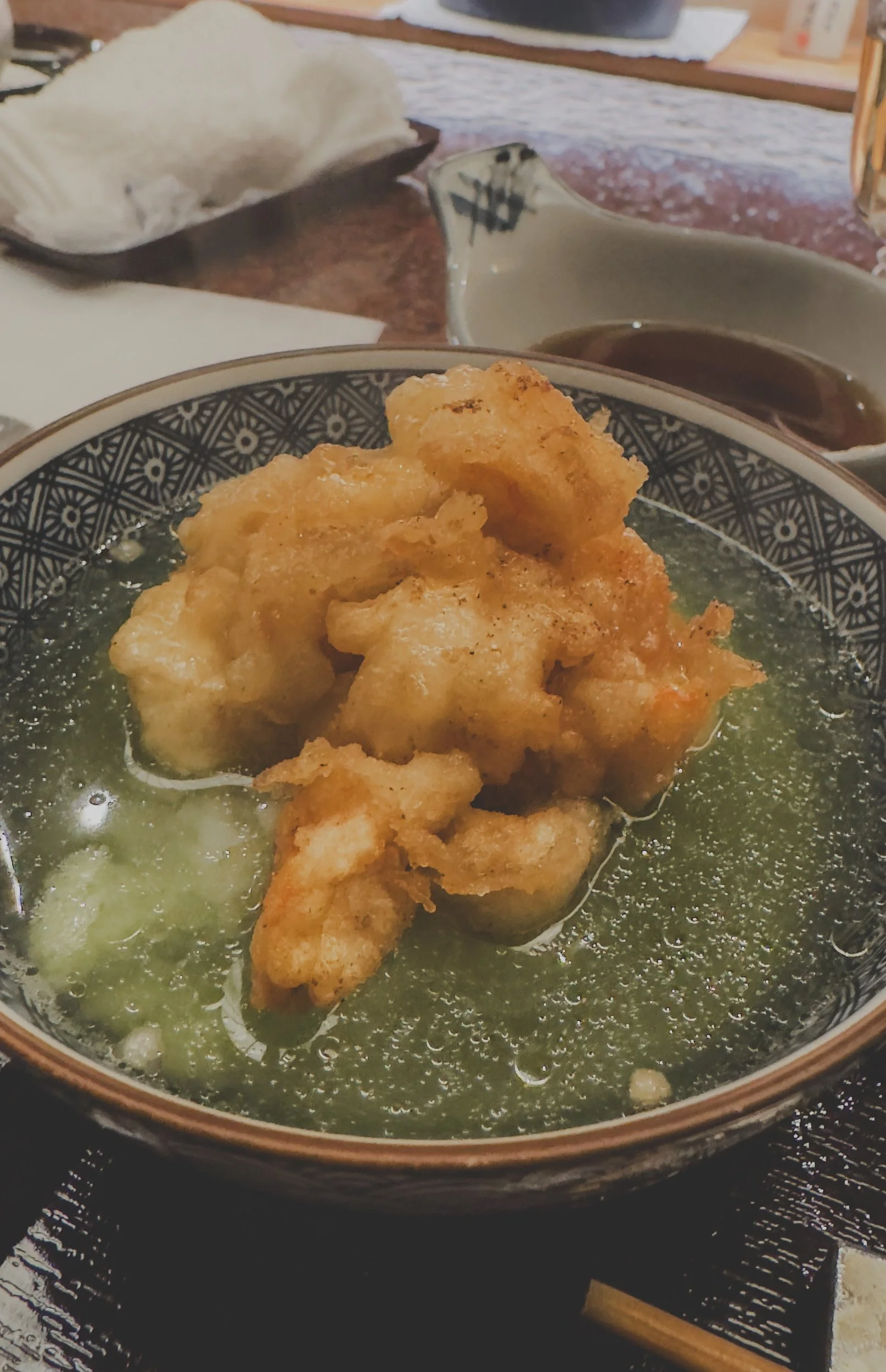
Once the frying begins, the kitchen immediately showcases its technical range with the Kuruma Ebi (Prawns). This is served in two distinct chapters: first, the sweet, tender bodies, followed by the fried heads. The heads are a particular highlight, fried until they achieve a delicate, cracker-like snap that concentrates the oceanic flavor into a single, high-intensity bite. This transition from soft to crunchy is your first hint at the chef’s ability to manipulate texture through precise temperature control.
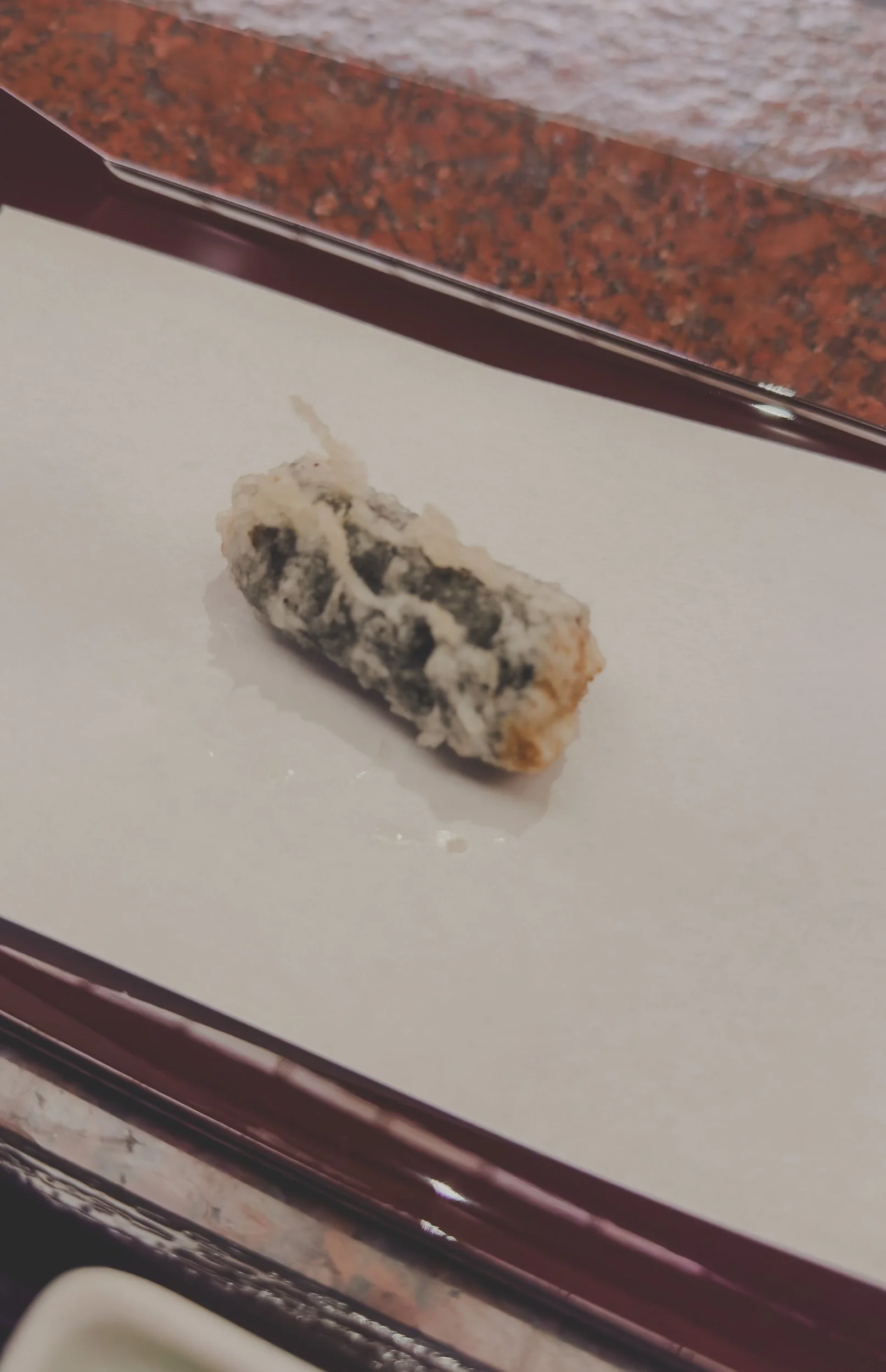
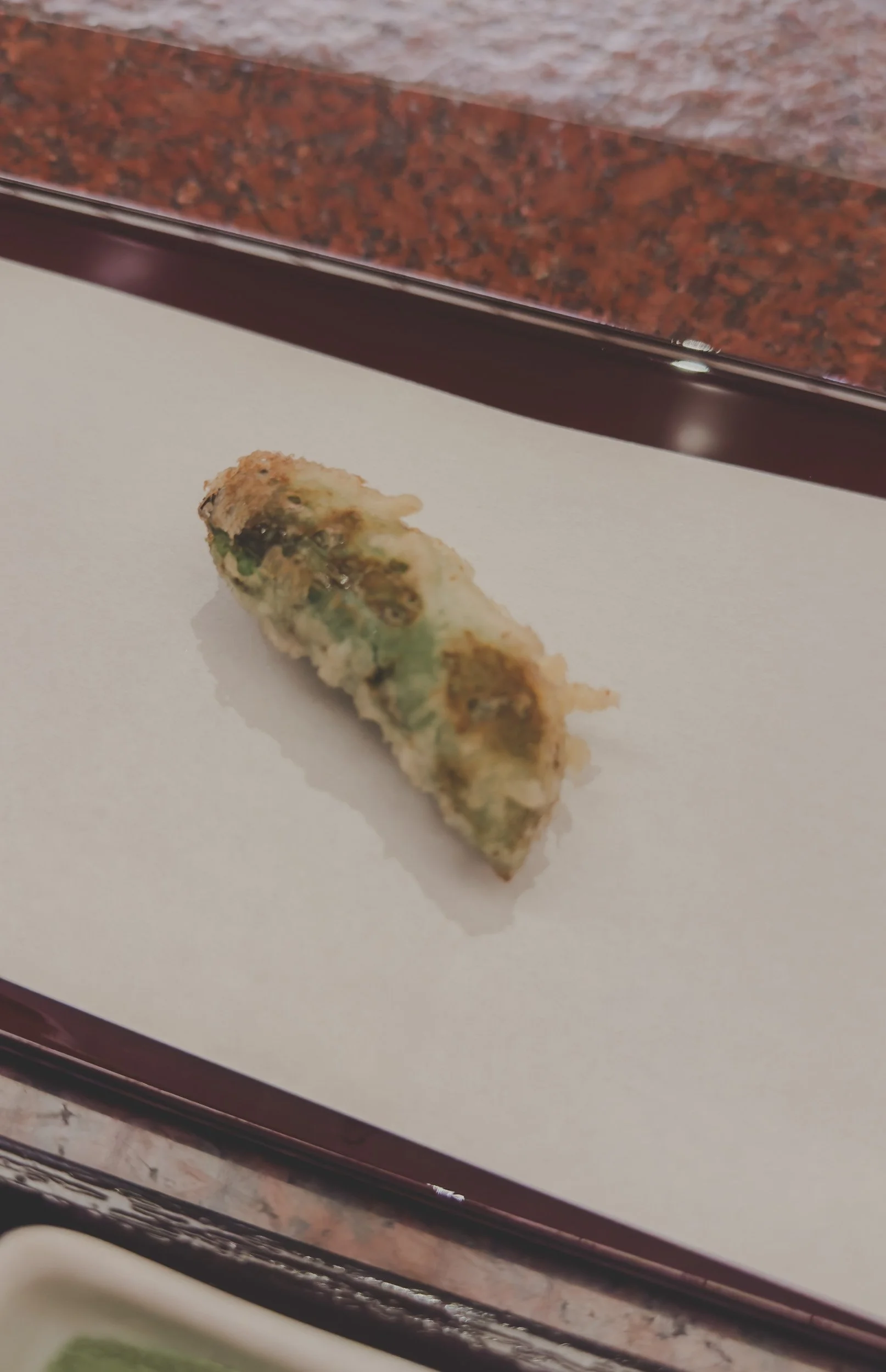
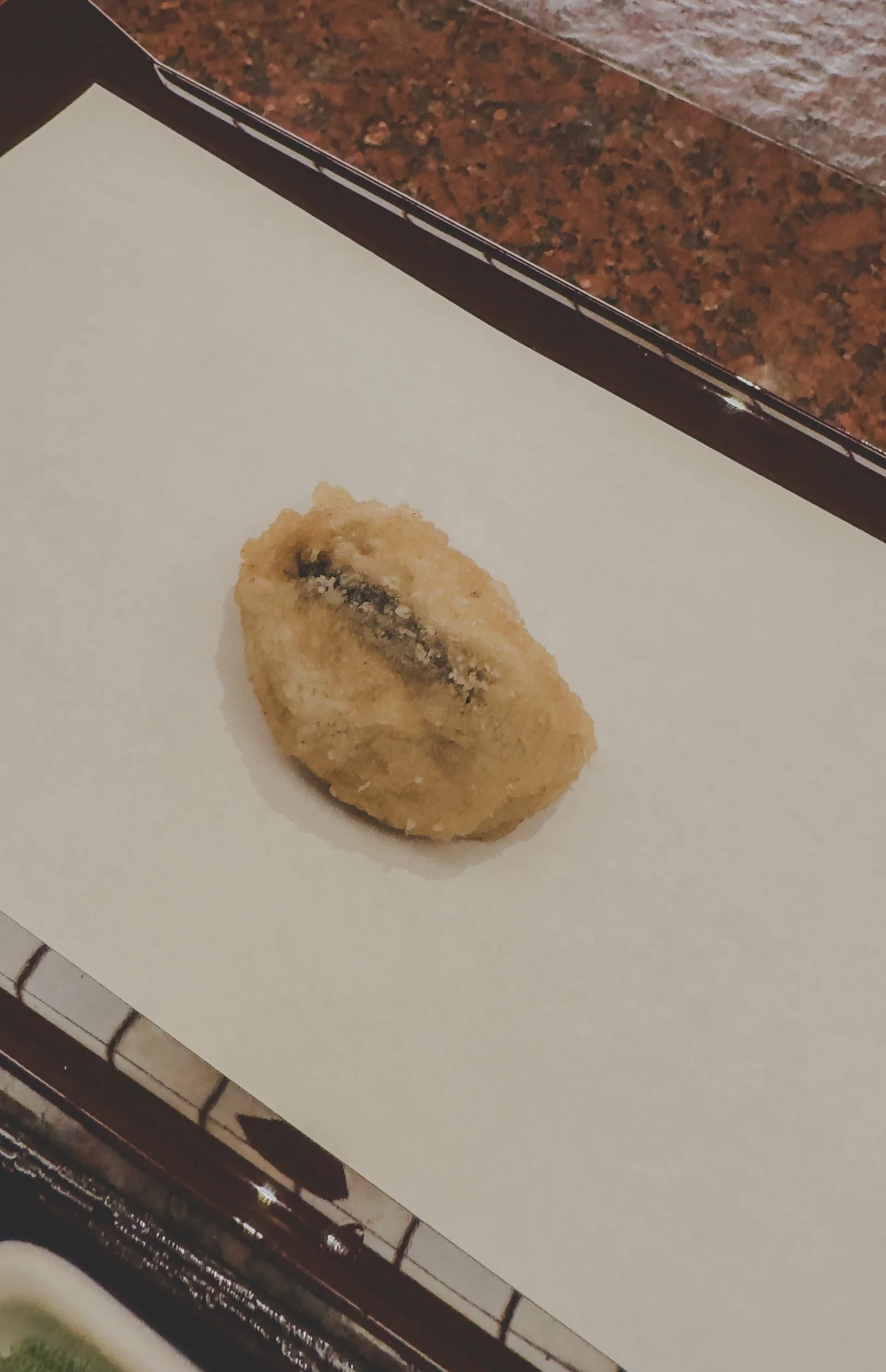
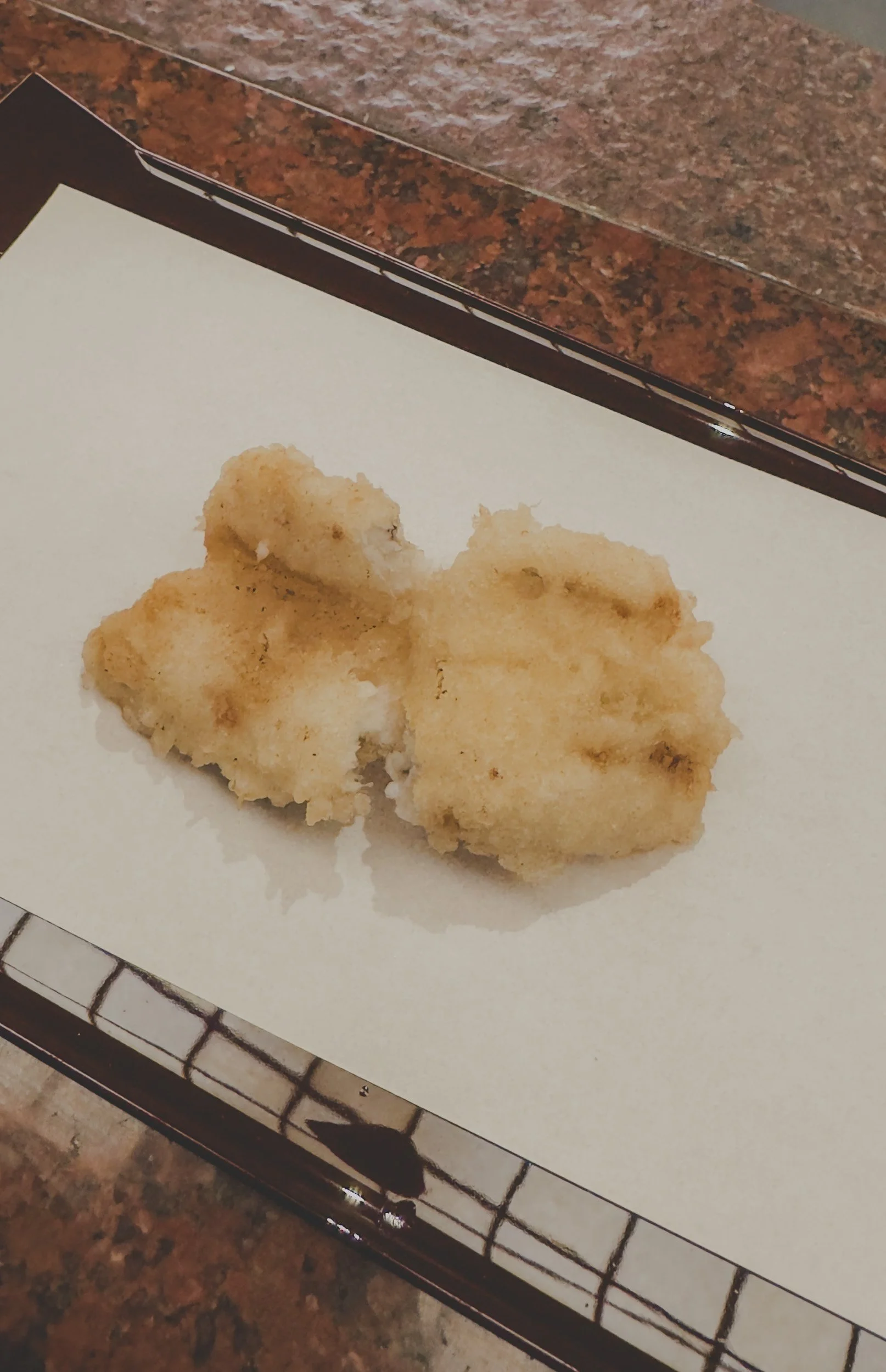
The heart of the experience is defined by the Kyo-yasai, or Kyoto’s legendary local vegetables. The Kyoto Corn is the undisputed protagonist here, a gold-standard piece where individual kernels are fried into a golden lattice that shatters on impact. This is often followed by the Kamo Eggplant, which acts as a thermal sponge, holding a surprising amount of heat and juice within its light, translucent coating. You also likely encountered Manganji Peppers or seasonal Bamboo Shoots, which provide an earthy, structural "snap" that anchors the meal in the specific terroir of the Takagamine and Gion hills.
As the omakase reaches its crescendo, the kitchen introduces more complex, technically demanding items. Other high-performance entries include the Scallop with Truffle Salt, which is flash-fried to maintain a nearly-raw interior, and the Conger Eel (Anago), a richer, more substantial piece of seafood that signals the approaching end of the savory sequence. These items are designed to feel indulgent yet clean, thanks to the constant refresh of the pure cottonseed oil.
The closing ritual is centered around the Kakiage, a dense, multi-ingredient fritter of shrimp and vegetables. You are usually given the choice between Ten-don (served over rice with a deep, sweet glaze) or Ten-cha (submerged in a bowl of hot, aromatic green tea). This final rice course is the emotional anchor of the meal, providing a warm, comforting conclusion before the palate is reset with pickled vegetables and a bowl of freshly whisked Matcha.
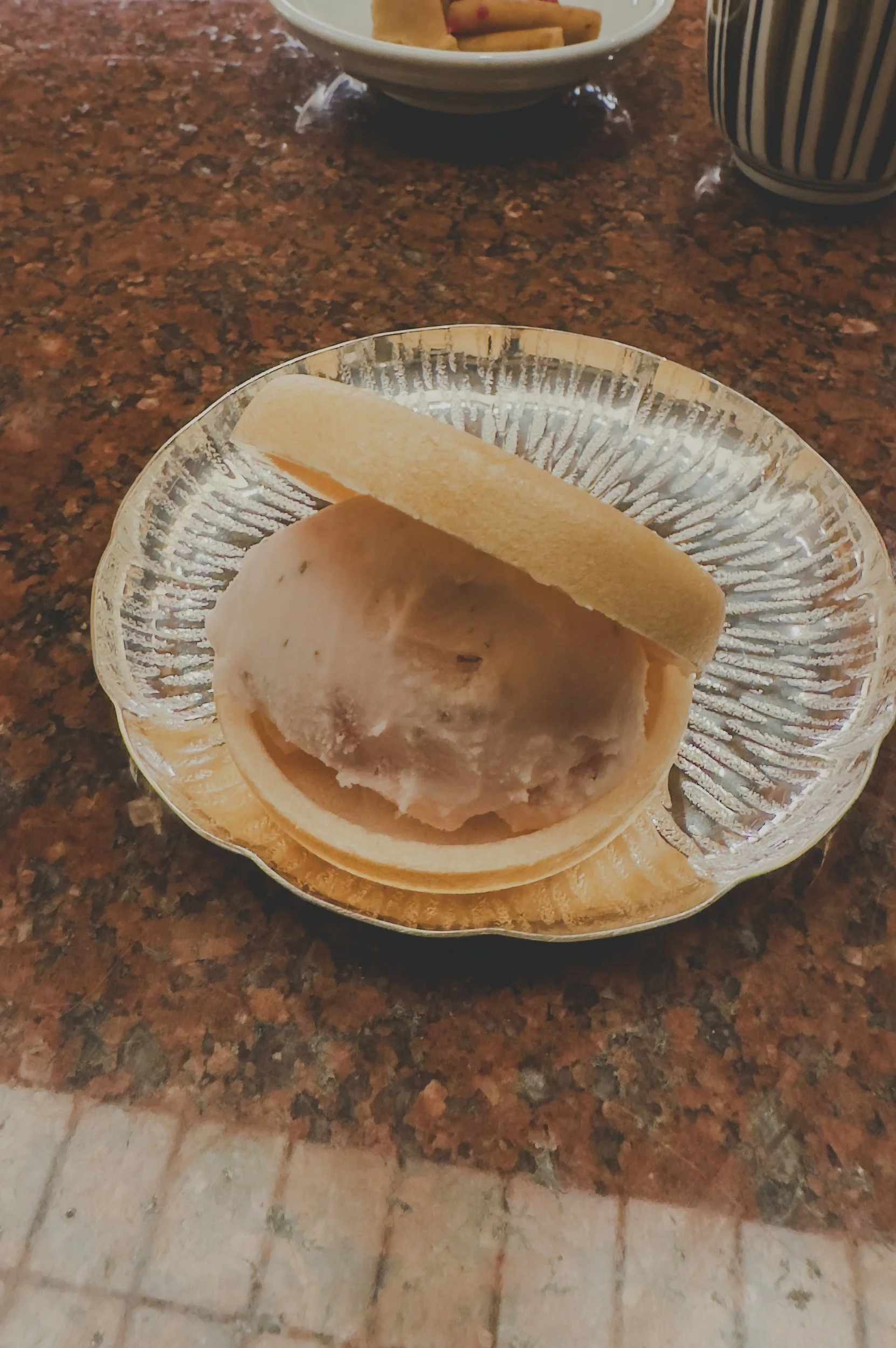
The final curtain call is a Monaka, a refined take on the ice cream sandwich that mirrors the crisp, shattered texture of the tempura batter. Two delicate, toasted rice wafers enclose a nucleus of dense, chilled ice cream—often a high-spec vanilla or bitter matcha—providing a sharp, temperature-driven reset for the palate. This playful "crunch" offers a rhythmic bookend to the evening, ensuring the transition from the savory heat of the fryer to the quiet restoration of the final tea is both light and memorable.
Beverage: A Great Composition
The beverage program at Tempura Endo Yasaka North is a factual highlight of the stay. The Sake List is a curated journey through the breweries of Fushimi and beyond, featuring everything from crisp, "dry" junmais to sophisticated sparkling sakes that act as a perfect foil to the richness of the fried courses. Each pour is served in bespoke glassware that enhances the aroma and highlights the technical precision of the brewing process.
For those seeking a non-alcoholic refresh, the Tea Selection is equally impressive. The restaurant offers a range of high-grade matchas and roasted hojichas that are prepared with the same level of care as the food. The "Special Relationship" between the bitter notes of the tea and the sweet, fried vegetables provides a restorative balance that is quintessentially Japanese. The service is proactive, ensuring your cup is never empty and the temperature is always precise.
The wine list is surprisingly robust for a traditional tempura house, featuring a selection of Champagnes and white Burgundies that are chosen specifically for their acidity. The sommelier operates with a high degree of professional knowledge, guiding guests toward pairings that enhance the "cleanliness" of the tempura. It is a liquid narrative that supports the food without ever overshadowing it, providing a high-energy accompaniment to the meal.
Finally, the Whisky Selection offers a nod to Japan’s global reputation in distilling. A glass of high-end Hibiki or Yamazaki serves as an excellent digestive, enjoyed as the chef prepares the final rice and dessert courses. The integration of high-performance modern spirits with these traditional, "slow" methods makes the beverage program a destination in its own right. Whether you are a connoisseur or a casual sipper, the options are designed to meet you wherever you are on your culinary journey.
Pricing | Within Expectations
In 2026, a dinner at Tempura Endo Yasaka North is a calculated investment in regional authenticity. Point-redemption strategies don’t apply here, but the value-per-yen remains high when compared to the 3-star icons of the city. Omakase menus typically range from ¥15,000 to ¥30,000, which includes a rigorous sequence of 10 to 15 courses. Given the rarity of some of the seasonal ingredients and the technical mastery on display, the pricing represents a fair exchange for a top-tier Kyoto experience.
A cash booking for the lunch course represents a technical masterclass in value, often starting around ¥8,000 to ¥10,000. This offers a shorter but equally precise expression of the brand’s philosophy, making it an ideal choice for the traveler who wants the Michelin-level vibe without the commitment of a full evening. Because this branch is often in high demand, the "pro move" is to leverage your concierge at properties like the Hyatt Regency or Park Hyatt to secure a counter seat well in advance, ensuring you maximize your ROI on the evening’s flavor profile.
Curated for Class?
For the visitor who demands the "best of the best" in Japanese frying, Tempura Endo Yasaka North is the definitive answer in 2026. While Tempura Matsu offers a more experimental, riverfront energy and Gion Fuji provides a more "modern-zen" vibe, this property captures the balanced, historical, and vibrant spirit of Kyoto like no other. It is a restaurant that has perfected the art of the tempura omakase, providing a seamless, five-star experience that prioritizes both culinary inspiration and high-performance execution.
I highly recommend this property for the "objective-driven" traveler—the one who wants a quiet, technically superior environment to explore the bounty of the ancient capital. While the counter seats are a factual constraint and require booking weeks in advance, the resulting meal is a masterclass in elemental purity. If you are looking for the future of Kyoto luxury—understated, historical, and exceptionally executed—this teahouse by the pagoda is your definitive home.
Curated for Class Final Score | 42/50
Tempura Endo Yasaka North delivers a flawless, if almost overwhelming 15-course sequence of "Kyoto-style" tempura, highlighted by the signature shattered corn and a crisp ice cream monaka finish that feels remarkably light. Housed in a historic teahouse where the aroma of temple incense lingers, the restaurant provides an intimate and English-friendly gateway into the atmospheric heart of Gion.
Service: 8.5/10
Atmosphere: 8/10
Food Quality: 8.5/10
Mastery of Taste(s):9/10
Value for Money: 8.5/10